
Turns out your terrarium has been missing a tiny, hardworking crew this whole time!
If you’ve been building terrariums for a while, you’ve likely heard people talk about terrarium springtails as a secret weapon for keeping things clean. These microscopic critters do a lot more than you’d expect. Getting to know them changes everything.
Springtails are soft-bodied, wingless hexapods, not insects, though they’re closely related. They show up in soil all over the world, from tropical rainforests to your backyard garden. And, luckily for us, they absolutely thrive in enclosed, humid environments.
Once you add them to your setup, you’ll notice a shift pretty quickly. Mold patches that used to appear after a week or two simply don’t get the chance to take hold. The substrate stays fresh, and your plants look healthier overall.
So if you’ve been on the fence about whether these little guys are worth the effort, the short answer is yes, completely. Let’s dig into everything you need to know to make them work for you and your terrarium.
What are springtails, exactly?
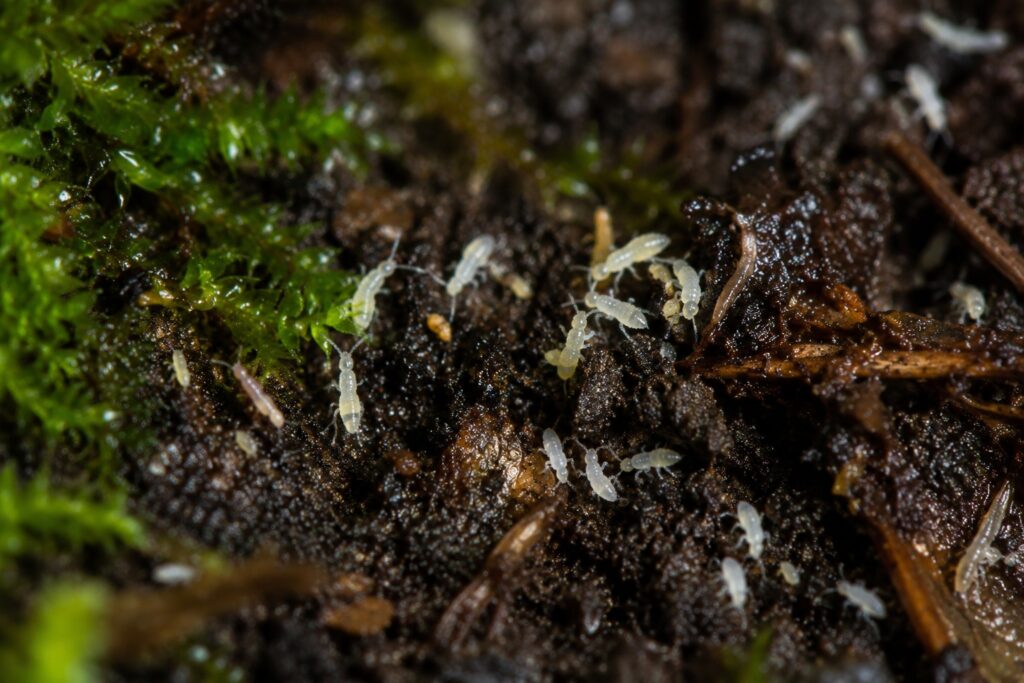
Springtails belong to the class Collembola and are among the most abundant arthropods on Earth. Scientists estimate there can be up to 100,000 of them per square meter of healthy soil.
They get their name from a forked appendage called a furcula, tucked under their abdomen, which they use to launch themselves into the air when threatened. It’s a fast, spring-like movement that’s honestly pretty impressive for something so tiny.
In a terrarium, they live in the top layer of substrate and leaf litter, moving through micro-spaces in the soil that you’d never even notice.
They feed primarily on fungal spores, decaying organic matter, and bacteria, which makes them naturally aligned with everything you’re trying to manage inside a closed or semi-closed ecosystem.
What do they look like?
Most species used in terrariums are between 0.5 and 2 millimeters long, which means you’ll mainly see them as tiny white or grey specks moving across the glass or substrate surface.
The most popular terrarium species, Folsomia candida, is a pale, almost translucent white, easy to spot against dark soil.
Don’t let their size fool you. A healthy springtail colony is incredibly active, and once you’ve got a good population going, they really do get into every corner of the enclosure.
Are they harmful to plants or animals?
Absolutely not. Terrarium springtails are completely harmless to your plants, mosses, and any dart frogs, geckos, or invertebrates you might be housing.
They don’t bite, sting, or parasitize anything. They’re detritivores through and through, meaning they’ll only ever consume dead or decomposing material, never living plant tissue.
In fact, most dart frog keepers deliberately add springtails as a supplemental food source for their frogs, since the two coexist so naturally. It’s one of those win-win situations where the springtails benefit your ecosystem and your animals get an occasional snack.
Why adding them to your terrarium makes such a big difference
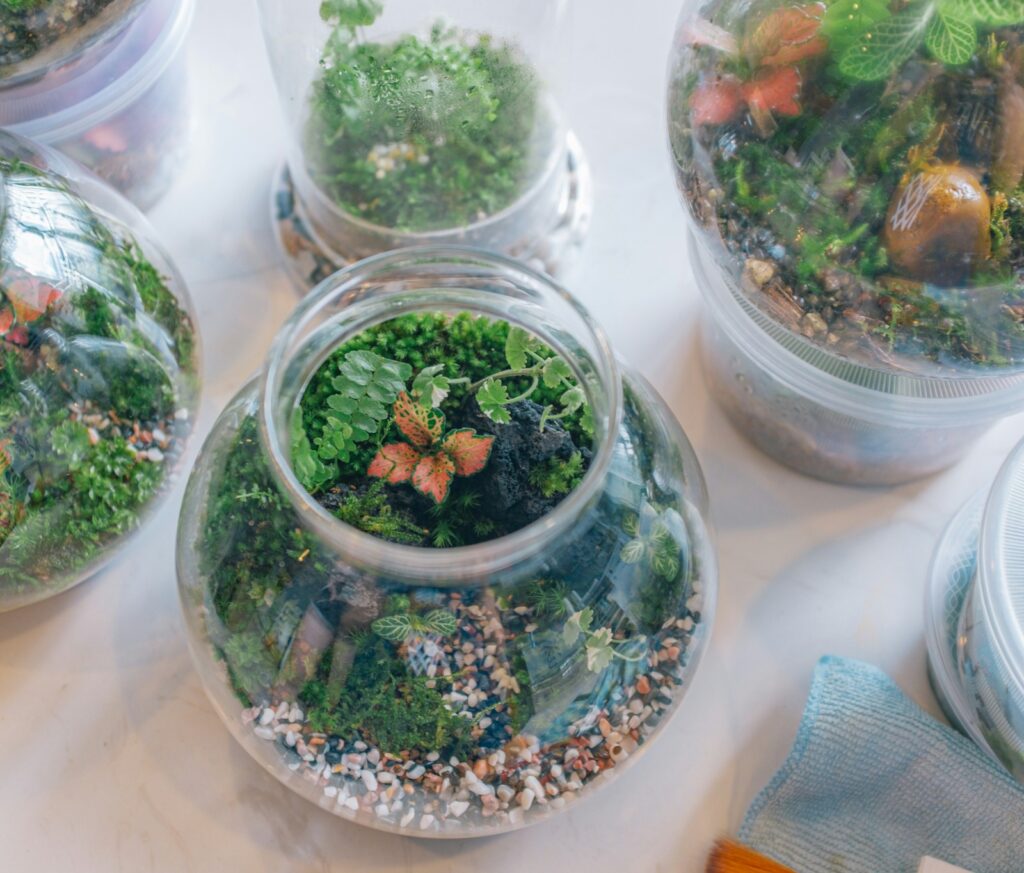
The primary reason people add springtails is mold control and it really works. Closed terrariums in particular are prone to white, fuzzy mold outbreaks, especially in the first few weeks after planting.
The environment is warm, moist, and full of organic material, which is basically a five-star resort for mold spores. Springtails consume those spores before they have a chance to colonize.
They’re not just reactive either; they actively graze on the fungal threads (hyphae) that grow through your substrate. Furthermore, they help break down decomposing leaves, wood, and other organic debris, cycling nutrients back into the soil where your plants can use them.
Additionally, a thriving springtail colony is often used as a health indicator for the whole ecosystem. If your population is growing, it generally means your humidity, substrate, and ventilation are all in a good place. On the other hand, if the colony crashes, that’s a signal something in the enclosure is off.
Mold prevention up close
Let’s talk about that mold issue in more detail, because it trips up so many beginners. When you plant a new terrarium, you’re introducing a ton of organic material (potting mix, coconut coir, leaf litter, wood) all of which contains dormant mold spores.
The moment conditions are right, those spores activate.The standard advice used to be “just wipe it off.” But without terrarium springtails doing the work at the root level, mold just keeps coming back.
With a healthy population in place, you rarely have to intervene manually at all. Also, we have a complete article about terrarium mold you migh want to check out here.
Nutrient cycling and soil health
Beyond mold, the nutrient cycling role of springtails is genuinely underrated. As they break down organic matter, they produce microbe-rich frass (essentially insect droppings) that enriches the substrate.
This is especially important in bioactive setups where you want a self-sustaining ecosystem rather than one that needs constant manual maintenance. Over time, the soil in a springtail-populated terrarium becomes richer and more biologically active.
Plants put out stronger root systems, mosses spread more readily, and the overall ecosystem becomes far more resilient to disturbances like overwatering or a sudden temperature swing.
How to culture your own springtails
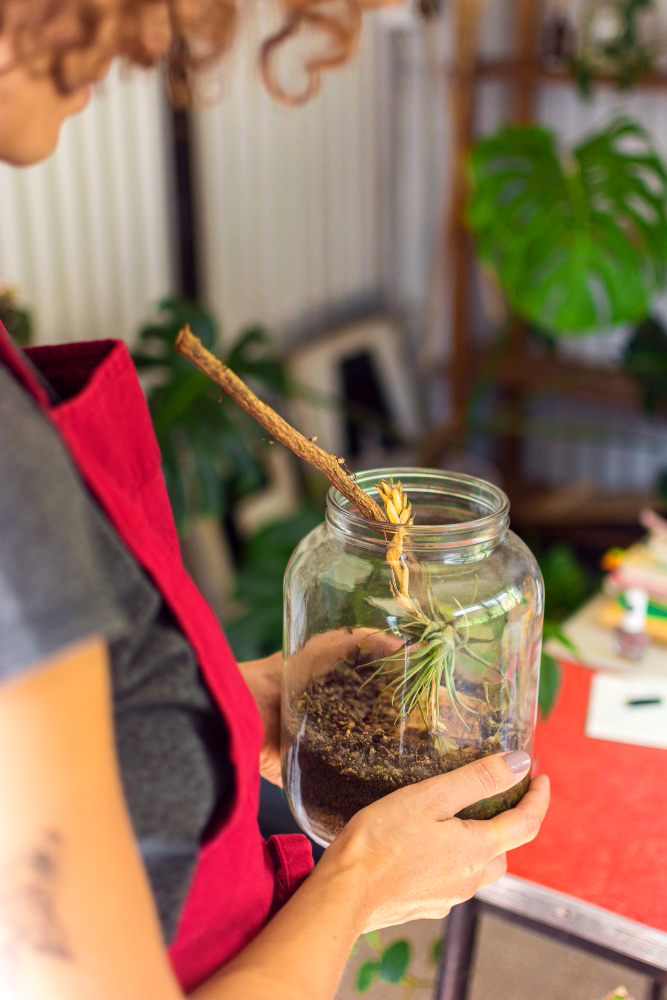
Culturing your own terrarium springtails is easier than most people think, and it saves money in the long run. You’ll need a small, ventilated container (a deli cup with a mesh lid works perfectly) and a suitable substrate.
Charcoal (activated or regular) is the most popular base because it’s lightweight, retains moisture well, and doesn’t mold easily itself. To get started, add about an inch of damp charcoal to your container, introduce your starter culture (purchased from a reputable seller), and feed them every few days.
The most common food for cultures is nutritional yeast, sprinkled lightly on the surface. Don’t overdo it. Excess food rots and crashes cultures fast. Here’s a quick overview of what you’ll need.
| Item | Notes |
|---|---|
| Ventilated container | Deli cup with mesh lid works great |
| Activated charcoal | Main substrate; retains moisture |
| Starter culture | Buy from a reptile or vivarium supplier |
| Nutritional yeast | Feed every 2–3 days, very small amounts |
| Spray bottle | To keep substrate lightly moist |
Within two to four weeks, you should have a booming colony ready to introduce to your terrarium.
Tropical vs temperate species
The two most common species you’ll come across are Folsomia candida (tropical) and Sinella curviseta (also tropical but slightly larger). Both are excellent for terrariums, though tropical species generally do better in the warm, humid conditions most terrariums provide. Temperate species are hardier in cooler setups.
If you’re keeping a desert terrarium, springtails can still work, but you’ll need to keep their culture moist separately and introduce them in smaller numbers, the dry substrate won’t support a full colony long-term. For tropical and temperate bioactive builds, though, terrarium springtails will thrive and self-sustain almost indefinitely.
How many springtails do you need?
There’s no exact number, but a good rule of thumb is to start with several hundred springtails for a 10-gallon equivalent enclosure. You can pour them directly from the culture container (charcoal and all) onto the substrate surface. They’ll spread themselves out naturally within a few hours.
From there, they’ll reproduce on their own as long as there’s enough food (organic matter in the substrate), adequate moisture, and no chemical interference. Avoid using pesticides, fertilizers, or any copper-based treatments near your terrarium, as these are lethal to springtail populations.
Common mistakes to avoid
Even experienced hobbyists make a few classic errors when working with springtails. Here’s what to watch out for.
- Overfeeding in cultures: Too much nutritional yeast leads to bacterial blooms that wipe out your colony. Feed less than you think you need to.
- Letting the culture dry out: Springtails need moisture to breathe through their skin. Even a few days of dryness can crash a culture.
- Adding springtails to a brand-new, unestablished setup: Give your terrarium at least one to two weeks to settle before introducing them, so there’s some organic matter for them to work with.
- Using pest control sprays nearby: Even airborne residues from insecticides can devastate a colony.
- Ignoring a declining population: If terrarium springtails are disappearing, check your substrate moisture level, ventilation, and whether any animals in the enclosure are overconsumig them.
Setting up a self-sustaining bioactive terrarium with springtails
The goal for most terrarium enthusiasts is a setup that more or less runs itself, one where you’re maintaining and enjoying it rather than constantly troubleshooting. Springtails are a foundational piece of that puzzle, but they work best alongside a few other elements.
- A solid drainage layer. Without it, water pools at the bottom and creates anaerobic (oxygen-free) zones where harmful bacteria thrive and springtails can’t survive. Use leca, gravel, or hydroballs below your substrate, at least an inch or two deep.
- Good substrate layering. A mix of organic topsoil, coconut coir, and horticultural charcoal gives springtails plenty of material to work through. Add a layer of leaf litter on top (magnolia and oak leaves are popular choices) for a constant food source that also looks incredibly natural.
- Isopods as partners. A bioactive setup pairs beautifully with isopods, which are slightly larger detritivores that break down bigger chunks of debris. Together, terrarium springtails and isopods cover almost the full spectrum of organic waste in a terrarium, leaving very little work for you to do manually.
Keeping your springtail colony healthy long-term
Once your colony is established inside the terrarium, maintaining it is mostly a matter of keeping the overall ecosystem in balance. Don’t let the substrate dry out completely, springtails need consistent moisture, and a dry spell can dramatically reduce their numbers.
If you notice the population declining and your terrarium conditions seem fine, consider adding a small amount of food directly to the enclosure. A pinch of nutritional yeast or a thin slice of mushroom placed on the surface can help boost numbers temporarily while the colony rebalances.
Equally important is avoiding the temptation to “deep clean” your terrarium. Stirring or replacing the substrate removes the very microhabitat that springtails depend on. Instead, spot clean only, remove dead plant material and waste from visible areas, and let the springtails and isopods handle everything else beneath the surface.
Read next: when your terrarium needs a fresh start
If you’ve been enjoying your terrarium but things have started looking a little crowded or overgrown, it might be time to think about replanting. Knowing how to approach that process without losing what you’ve built is something a lot of hobbyists find tricky.
We wrote a full guide walking you through exactly that, covering when to act, how to choose what stays, and how to avoid common missteps that can set your ecosystem back weeks. It’s practical, step-by-step, and written for real hobbyists rather than botanists.
The article “How to replant a terrarium that’s gotten too full” covers everything from safely removing overgrown plants to reintroducing your springtails and isopods after the process. Go check it out, it pairs perfectly with what you just learned here.
You’ll come away with a clear plan for keeping your terrarium healthy and beautiful for the long haul, no matter how lush it gets. Give it a read when you’re ready for the next step in your terrarium journey.