
You’ve spotted something green where it shouldn’t be: figure out what’s going on before it takes over your whole setup!
If you’ve noticed a greenish film or fuzzy coating spreading across the glass or substrate of your build, you’re dealing with terrarium algae and you’re definitely not alone in this. It’s one of the most common issues hobbyists face.
The good news is that algae in a terrarium doesn’t mean you’ve done everything wrong. In fact, it often signals that your setup is full of life and humidity, which are exactly the conditions most plants and critters love.
That said, letting algae go unchecked can cause real problems. It can block light from reaching your plants, compete for nutrients, and make your beautifully crafted landscape look murky and neglected over time.
So let’s talk about what causes it, how to deal with it, and most importantly how to stop it from coming back. The fixes are simpler than you might expect, and you probably already have what you need.
What causes algae to grow in a terrarium?
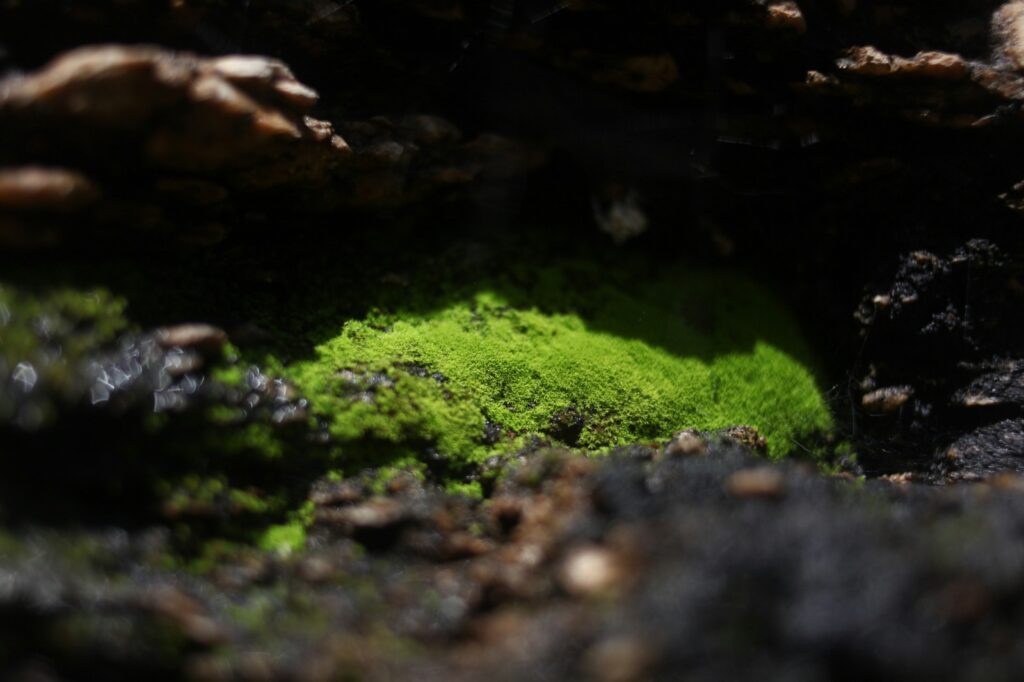
Algae isn’t some random invader that shows up out of nowhere. It grows when specific conditions align, and understanding those conditions is the first step to getting control of the situation.
Light exposure and algae growth
Too much light is one of the main reasons terrarium algae takes hold. When your terrarium gets more direct sunlight or artificial light than it needs, algae thrives because it’s incredibly efficient at converting that energy into growth.
Most closed terrariums do best with indirect light or a timer-controlled grow light running 8–10 hours a day. Consequently, placing your build near a sunny window often does more harm than good. The light intensity is simply too high for the balance you’re trying to maintain.
You can also check out our article about terrarium lighting here and decide what’s best for your tiny ecosystem.
Nutrient imbalance in the substrate
When there’s too much organic matter breaking down in the substrate, think overly rich soil mixes or uneaten food in bioactive setups, algae feeds on those excess nutrients. It’s essentially opportunistic, moving in wherever resources are abundant.
Additionally, if you’ve overfertilized your plants or added too much compost-heavy soil, you’re essentially laying out a buffet for algae. A leaner substrate mix suited to your specific plants tends to be far more resistant to outbreaks.
Humidity and water buildup
Terrariums are designed to hold moisture, and that’s usually a wonderful thing. However, when condensation sits on glass for extended periods without cycling properly, terrarium algae finds exactly the foothold it’s looking for.
A healthy closed terrarium should show some condensation in the morning that clears up as temperatures rise during the day. If your glass stays wet and foggy all day long, that’s a sign that ventilation needs adjusting..
How to identify the type of algae you’re dealing with
Not all algae looks or behaves the same way, and identifying what you’ve got helps you choose the right approach. Furthermore, some types are more stubborn than others and need a different strategy to remove.
| Algae type | Appearance | Common cause |
|---|---|---|
| Green spot algae | Hard green dots on glass | Too much light |
| Blue-green algae (cyanobacteria) | Slimy, dark green film | Nutrient excess + low flow |
| Filamentous algae | Long, thread-like strands | High light + humidity |
| Green dust algae | Powdery green coating | New setups, stabilizing |
Green dust algae, for instance, often appears in newly built terrariums and tends to fade on its own as the ecosystem stabilizes. Blue-green algae, on the other hand, is actually a bacteria and it’s smellier and more persistent than the rest.
How to remove terrarium algae step by step
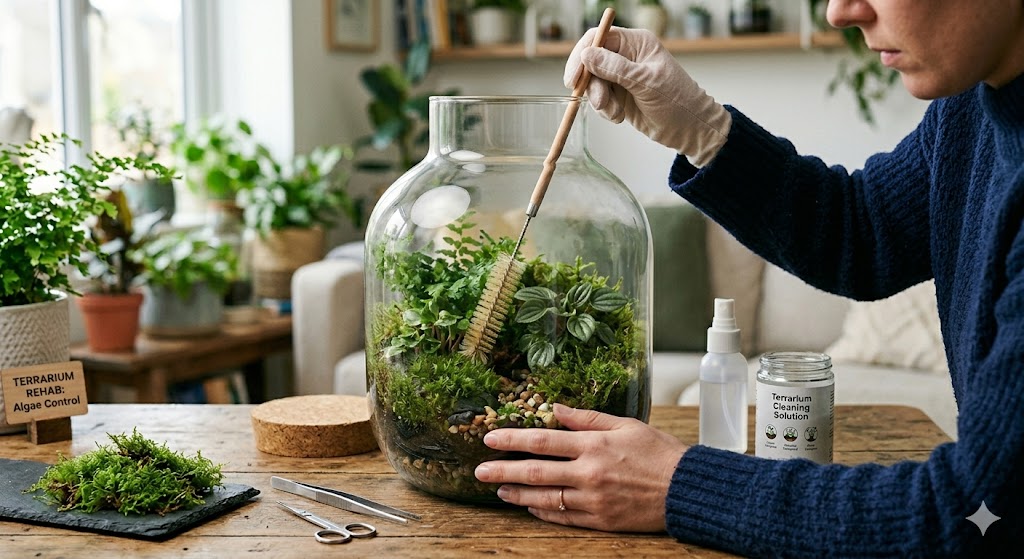
Once you’ve spotted terrarium algae and identified what you’re dealing with, it’s time to take action. The removal process is straightforward, and you don’t need any harsh chemicals.
Cleaning the glass
Start with the glass, since that’s usually where algae is most visible. A simple magnetic scraper or even a soft toothbrush works really well for spot algae on the inside of the panes.
For tougher buildup, a cotton swab dipped in diluted hydrogen peroxide (3% solution) can help dissolve stubborn patches without harming your plants or soil. Just make sure to use it sparingly and only directly on the affected area..
Removing algae from hardscape and substrate
Algae on rocks, driftwood, and decorations is a bit trickier to handle. Therefore, the easiest approach is to remove the affected piece, scrub it with a soft brush under warm water, and let it dry before putting it back.
Never use soap or commercial cleaning products inside your terrarium, even small residues can disrupt the microbial balance of your substrate and harm plants. Warm water and mechanical scrubbing is genuinely all you need in most cases.
Adjusting your setup after cleaning
Cleaning alone won’t solve the problem if the root cause is still there. So after you’ve removed the terrarium algae, take a moment to assess what triggered it: too much light? Poor ventilation? Overly rich soil?
Making one or two targeted adjustments after a clean is the difference between solving the problem for good and dealing with another outbreak two weeks later. Think of the cleaning as the first step, not the whole solution.
How to prevent algae from coming back
Prevention is always easier than treatment, and the steps involved aren’t complicated. A few small tweaks to your routine can make a huge difference in keeping your terrarium clear and balanced.
- Use a light timer: Set your grow light to run for no more than 10 hours a day. Consistency helps your whole ecosystem stay stable.
- Position carefully: Keep your terrarium out of direct sunlight. Bright, indirect light near a window is usually ideal.
- Vent regularly: For closed terrariums, opening the lid for 30–60 minutes every few days helps regulate humidity and prevent stagnation.
- Choose the right substrate: A well-draining, low-nutrient base layer reduces the organic matter that feeds terrarium algae.
- Don’t overwater: Add water only when condensation has fully cleared and the substrate feels dry near the surface.
Beyond technique, it also helps to keep a close eye on your build in the first few weeks after a cleaning. That’s when algae tends to try making a comeback, and catching it early makes removal much quicker.
Can algae ever be a good thing in a terrarium?
Interestingly, the answer is sometimes yes. A thin, even coating of green on rocks or the back glass of a naturalistic paludarium, for example, can actually look beautiful and add to the lived-in feel of the setup.
Terrarium algae becomes a problem mainly when it gets out of hand blocking light, covering plants, or spreading across the substrate. In small, controlled amounts on hardscape, it’s often just part of a thriving ecosystem doing exactly what it’s supposed to do.
The key is intention. If you want algae as part of the aesthetic, manage it so it only grows where you want it to. If you don’t want it at all, the prevention steps above will keep it at bay reliably.
When to worry (and when not to)
A single patch of green on the glass is not an emergency. Most experienced terrarium keepers see algae at some point, and in the vast majority of cases, a quick clean and a lighting adjustment is all it takes.
You should pay closer attention if the terrarium algae returns rapidly after cleaning, if it’s accompanied by a foul smell (which can indicate blue-green algae or rot), or if your plants start showing signs of stress like yellowing or wilting.
In those cases, it’s worth doing a deeper look at your substrate composition, checking for dead plant matter, and reconsidering your light schedule from scratch. Sometimes a full refresh of the substrate layer is the most effective reset you can give your build.
Also worth reading: how to spot terrarium mold
If terrarium algae has been giving you trouble, there’s a good chance you might run into mold at some point too and knowing how to tell them apart makes a real difference in how you respond.
Both algae and mold thrive in humid environments, but they behave very differently and need different treatments. Understanding what you’re looking at saves you time and keeps your terrarium healthier in the long run.
We put together a full article on terrarium mold, how to spot it and stop it, that walks you through the warning signs, the common causes, and exactly what to do when you find it. It’s a great companion read to everything covered here.
Head over and give it a read. You’ll come away feeling a lot more confident about keeping your terrarium clean, balanced, and looking its best for years to come.