
Tired of watching tiny flies ruin the mini world you worked so hard to build? The fix is simpler than you’d think!
You notice tiny dark flies hovering just above the soil, appearing out of nowhere. Before long, you’re dealing with fungus gnats in terrarium setups you spent weeks crafting. They’re frustrating, but you can absolutely fix this.
These little flies aren’t just annoying to look at. If left alone, they can actually damage the root systems of your plants by letting their larvae feed underground. That’s when a small problem turns into a real one.
The good news is that understanding what’s driving the infestation puts you way ahead. Fungus gnats thrive in specific conditions, and once you know those conditions, breaking the cycle becomes surprisingly straightforward.
So take a breath. Your terrarium isn’t doomed. With some easy adjustments and a bit of patience, you’ll have your little ecosystem looking healthy and gnat-free again in no time.
What are fungus gnats and why do they love your terrarium?
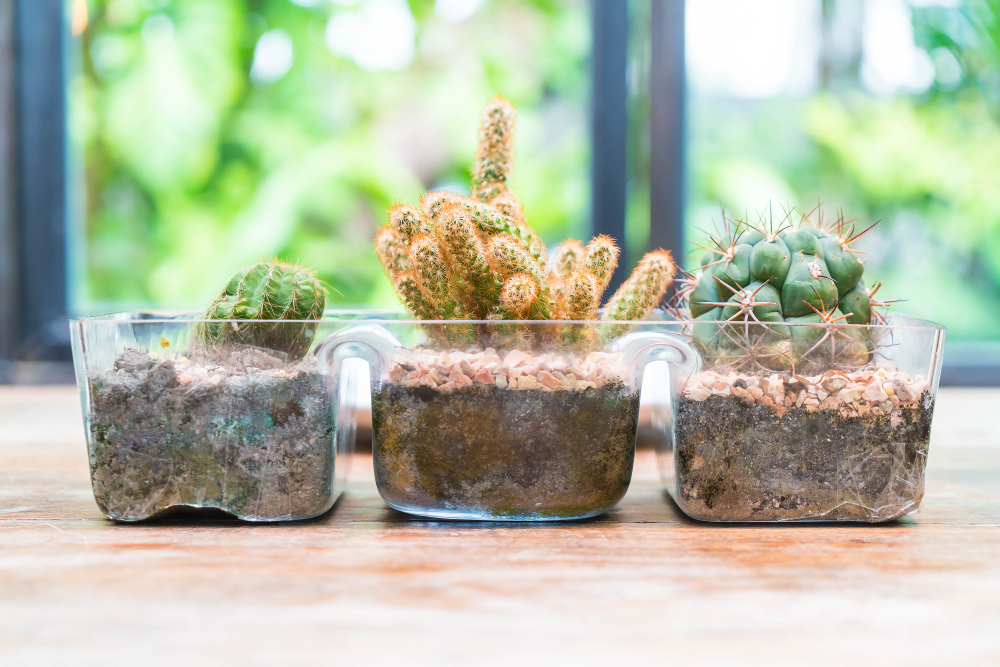
Fungus gnats (Bradysia species, most commonly) are tiny flies in the family Sciaridae. Adults are small, dark, and slender, easy to confuse with fruit flies, but they behave very differently.
They’re attracted to moisture and decaying matter
Fungus gnats lay their eggs in damp, organic-rich soil. Inside a terrarium, the conditions are practically ideal for them: enclosed humidity, decomposing plant matter, and soil that stays moist for long periods.
The larvae hatch and start feeding on fungi, algae, and organic debris, but they’ll also munch on plant roots if other food sources run low. That’s when your plants start showing signs of stress.
Closed vs. open terrariums: does it matter?
Yes, it does! Closed terrariums are more vulnerable because the sealed environment keeps everything consistently moist and warm. Open terrariums dry out a bit between waterings, which gives fungus gnats fewer chances to settle in.
That said, fungus gnats in terrarium setups of both types are very common. Open or closed, if the soil stays wet for too long, you’re creating a welcoming home for these pests.
You can also check out an in-depth article comparing open and closed terrarium to understand which one is better for you. Read it here.
How to spot a fungus gnat infestation early
Catching the problem early makes everything easier. Here are the key signs to watch for.
- Adult flies hovering near the soil surface: this is usually the first visible clue
- Tiny, thread-like larvae in the topsoil: almost translucent with a black head
- Yellowing or wilting plants despite correct watering: a sign root damage may be happening
- Sticky yellow traps turning dark quickly: a lot of adults means a large population below
If you see adults flying around, there are almost certainly larvae already in the soil. Adults only live for about a week, but each female can lay up to 200 eggs. Acting fast matters.
The real cause: overwatering
Let’s get real, the root cause of fungus gnats in terrarium environments is almost always overwatering. Moist soil that never fully dries out is exactly what these insects need to reproduce successfully and in large numbers.
This is especially tricky in terrariums because they often retain moisture naturally, particularly closed ones. You might be watering less than you think you are, but if the condensation never fully clears, the soil never gets a chance to breathe.
How to adjust your watering habits
Start by checking soil moisture before every single watering. Use a chopstick, wooden skewer, or your fingertip to poke about an inch into the soil. If it still feels damp, wait a day or two before watering again.
For closed terrariums, consider removing the lid briefly once a week to let excess moisture escape. A small change like this can significantly reduce the conditions fungus gnats need to thrive.
Choosing the right substrate helps a lot
If you’re still setting up your terrarium, substrate choice is huge. A well-draining mix, one that includes perlite, coarse sand, or pumice, will allow water to move through instead of sitting stagnant near the roots.
For existing terrariums, you can carefully add a thin top layer of coarse sand or fine gravel over the soil. This dries out fast and makes it much harder for gnats to lay eggs near the surface.
Practical solutions to get rid of fungus gnats
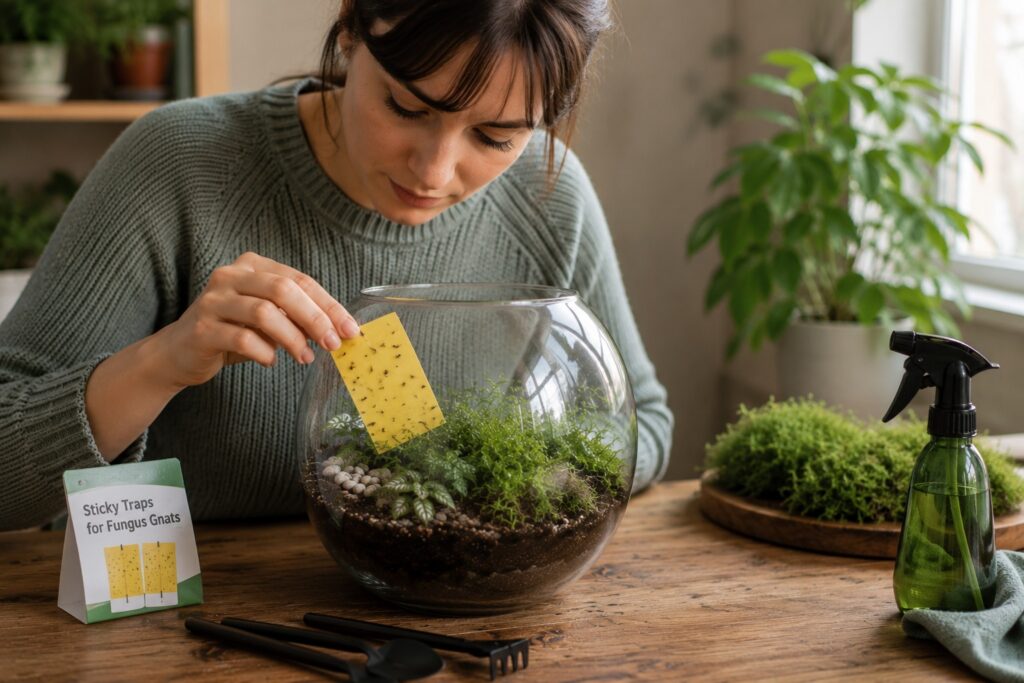
Now let’s talk about what actually works. Fungus gnats in terrarium setups respond well to a combination of approaches. Targeting both adults and larvae at the same time gives you the best results.
Yellow sticky traps
These are non-toxic, inexpensive, and surprisingly effective. Place small yellow sticky cards right at soil level inside or just outside the terrarium. Adults are attracted to the color yellow and get stuck when they land.
Traps won’t eliminate the larvae, but they reduce the adult population, which breaks the reproduction cycle. Replace them every couple of weeks or sooner if they fill up.
Bacillus thuringiensis var. israelensis (Bti)
This is a naturally occurring soil bacterium that kills fungus gnat larvae without harming your plants, pets, or the ecosystem inside your terrarium. It’s sold under brand names like Gnatrol or Mosquito Bits.
To use it, steep the granules in water, then use that water to mist or lightly water your terrarium soil. The larvae ingest the bacteria and stop feeding. It’s one of the most effective and safest larval treatments available.
Diatomaceous earth as a top dressing
Food-grade diatomaceous earth (DE) is made from fossilized algae and works mechanically, it damages the exoskeletons of insects that crawl through it. A thin layer on top of the soil can deter adults from laying eggs.
Keep in mind that DE loses its effectiveness when wet, so it works best in open terrariums or during drier periods. Reapply after heavy misting or watering to keep it active.
| Solution | Targets | Best for |
|---|---|---|
| Yellow sticky traps | Adults | Both open and closed terrariums |
| Bti (Mosquito Bits) | Larvae | All terrarium types |
| Diatomaceous earth | Adults/egg-laying | Open terrariums |
| Neem oil drench | Larvae + adults | Moderate infestations |
| Reducing watering | Eggs + larvae | Prevention and treatment |
Neem oil soil drench
Neem oil is derived from the neem tree and acts as a natural insecticide and repellent. Diluted and applied to the soil, it disrupts the life cycle of fungus gnats at multiple stages, larvae, pupae, and it also deters adults.
Mix a few drops of neem oil with water and a tiny bit of dish soap (to emulsify), then water your terrarium lightly with the solution. Repeat every 7–10 days for a few weeks for best results.
Biological controls worth knowing about
Beyond Bti, there are other living allies that can help you manage fungus gnats in terrarium environments naturally. These options are especially exciting if you’re into keeping your terrarium’s ecosystem as natural as possible.
Predatory mites (like Hypoaspis miles) live in the top layer of soil and feed on fungus gnat larvae. They’re tiny, harmless to plants, and incredibly effective at keeping larval populations under control over time.
Steinernema feltiae, a beneficial nematode, is another powerful option. These microscopic roundworms parasitize the larvae and can drastically reduce populations. They’re applied by watering them into the soil and work best in moist conditions, which, conveniently, is exactly what your terrarium provides.
Preventing fungus gnats from coming back

Once you’ve dealt with an infestation, keeping them away is mostly about maintaining good habits. Fungus gnats in terrarium setups tend to return when conditions go back to what originally attracted them. Here’s what to stay on top of.
- Remove dead plant matter promptly. Decaying leaves and stems are prime egg-laying territory. Do a quick visual check every week.
- Keep an eye on condensation levels. If your closed terrarium is dripping inside every single day, something’s off with moisture balance.
- Quarantine new plants. Before adding anything new to your terrarium, let it sit separately for a week or two to make sure you’re not introducing gnats from a plant nursery.
- Don’t fertilize excessively. Organic fertilizers can add to the decaying material that gnats love. Use sparingly and only when plants actually need it.
Getting rid of fungus gnats in terrarium setups takes a few weeks, not a few days. The life cycle of a fungus gnat is about 17 to 28 days depending on temperature. That means even after you’ve treated the larvae, adults may still emerge for a couple of weeks.
Stay consistent with your approach and don’t give up if you still see some adults after your first round of treatment. Combine at least two methods (for example, Bti for larvae plus sticky traps for adults) and stick with them. You’ll notice the numbers dropping week by week.
Also worth reading: how to clean a terrarium without killing plants
If you’ve been dealing with gnats for a while, your terrarium might need more than just a treatment, it might need a proper clean. And we’ve got you covered on that front too, so don’t worry.
Knowing how to clean a terrarium safely is one of those skills that every terrarium keeper ends up needing. Whether you’re dealing with algae, residue, or lingering pests, a proper clean can genuinely reset things.
We have a full article walking you through how to clean a terrarium without killing plants, and it’s packed with practical steps that respect your plants and the ecosystem you’ve built. It’s a great next read after this one.
Head over and check it out, you’ll find easy, plant-safe techniques that make the process a lot less daunting than you’d expect. Your terrarium (and your plants) will thank you for it!