
Your terrarium’s been looking a little sad lately? Here’s the no-stress routine that’ll turn things around!
Keeping a terrarium alive and gorgeous doesn’t have to feel like a science project. A solid terrarium maintenance routine is what separates a thriving mini-ecosystem from a sad, foggy box.
Most problems, yellowing plants, mysterious mold, that weird smell, creep in slowly. They’re not sudden disasters. They’re the result of small things being quietly ignored, and that’s genuinely good news.
Small, consistent actions are truly all you need. Once you find a rhythm, caring for your terrarium feels like second nature, like watering plants or feeding your cat every morning.
So let’s get into it. You’ve got a brand-new build or a terrarium that’s seen better days — either way, this guide has a realistic, simple schedule you’ll actually stick to.
Why having a routine matters more than being perfect
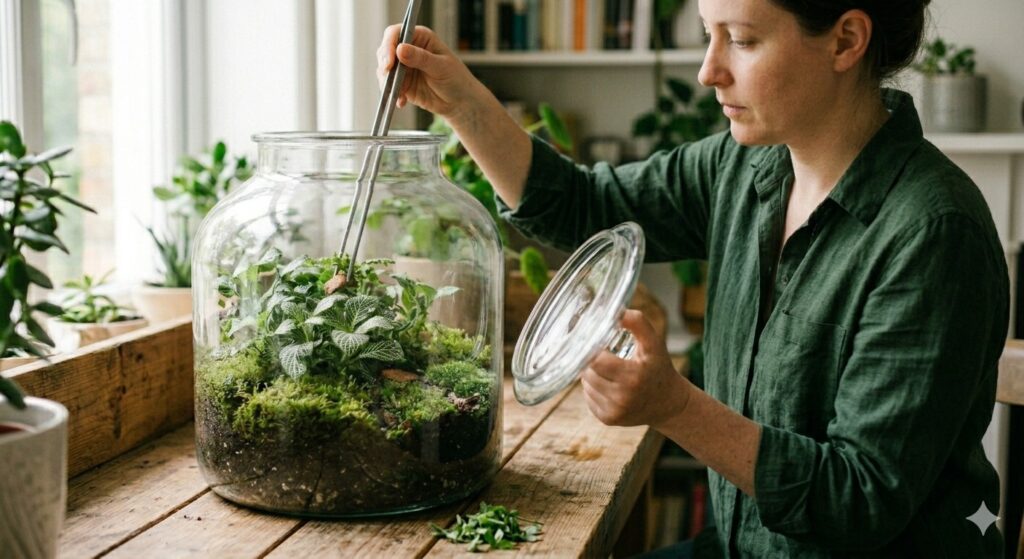
A lot of terrarium owners fall into the trap of doing too much at once, a big cleanup session every few months, and then wondering why things still look rough. Consistency beats intensity every single time.
Think of your terrarium as a tiny living system. Just like any ecosystem, it needs regular attention to stay balanced. Overwatering once won’t ruin it. Ignoring it for six weeks just might.
The mindset shift that changes everything
The goal isn’t perfection. You’re not trying to replicate a nature documentary. You’re aiming for stability, a terrarium that looks good, stays healthy, and doesn’t demand a rescue mission every time you peek inside.
Give yourself permission to keep it simple. The best terrarium maintenance schedule is one that fits into your actual life, not an idealized version of it.
Starting with what you’ve already got
You don’t need a fancy toolkit or a shelf full of specialist products. A spray bottle, small scissors, a soft cloth, and your own two eyes are genuinely enough to get started. The rest comes with time and observation.
Notice what’s changing inside your terrarium. Plants leaning toward light, condensation patterns, how fast or slow the soil dries, these clues tell you a lot more than any rigid schedule ever could.
Daily habits that take under two minutes
Terrarium maintenance at the daily level is mostly about looking, not doing. Before your morning coffee or while you’re waiting for something to load, take thirty seconds to glance at your terrarium.
What you’re checking for: excess condensation, visible mold, plants that look droopy or off-color, and any sign of pests on the leaves or soil surface. Catching things early makes everything easier.
What normal condensation looks like
A little moisture on the glass in the morning, especially in closed terrariums, is completely normal. It means your water cycle is doing its thing. However, if the glass is so foggy you can’t see through it, or if water is pooling at the base, that’s a cue to open the lid for a bit.
Airflow is your friend in those moments. Just a crack of fresh air for a couple of hours can reset the moisture balance without stressing your plants. If you want to know more about terrarium condensation, check out our article here.
When to skip a day of checking
Honestly? You can skip days. Life happens. The point of daily habits is to make observation feel natural, not to add another item to your to-do list. If you miss a day or two, your terrarium will be fine and you’ll just be a little more attentive when you check in next.
This is a hobby, and it should feel like one. The terrarium maintenance routine you build should work with your lifestyle, not against it.
Weekly tasks: the core of your terrarium maintenance
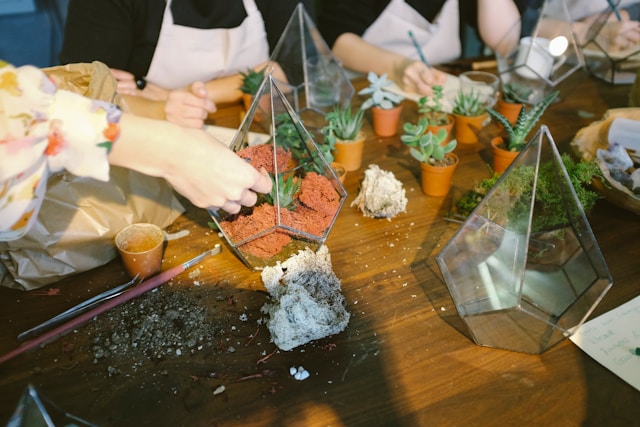
Once a week is where the real work happens, and even then, “real work” means fifteen to twenty minutes, tops. Put on a playlist, grab a cup of tea, and make it something you look forward to. Here’s a simple weekly checklist.
| Task | Time needed | Notes |
|---|---|---|
| Check moisture levels | 2 min | Poke the soil gently with your finger |
| Remove dead leaves or stems | 3–5 min | Use small scissors or tweezers |
| Wipe condensation from glass | 2 min | Soft cloth or paper towel |
| Look for mold or pests | 2 min | Check undersides of leaves too |
| Adjust lid or vents if needed | 1 min | Based on condensation and smell |
| Mist if soil feels dry (open terrariums) | 2 min | Avoid overwatering |
That’s it. Fifteen minutes a week is enough to keep most terrariums looking their best, as long as you’re doing it consistently.
Monthly check-ins: stepping back to see the bigger picture
Once a month, you want to zoom out a little. Instead of just maintaining, you’re evaluating. Is the terrarium growing in the direction you want? Are some plants taking over? Is the layout still working?
Monthly terrarium maintenance is also the right time to prune more aggressively, check the drainage layer if visible, and refresh any decorative elements that might have shifted or degraded. This is also when you’d add new plants or replace anything that’s not thriving.
Pruning without the mess
Pruning is one of those tasks people put off because it feels complicated, but it’s really not. Snip stems just above a leaf node, remove any yellowed or dead material, and take out anything touching the glass that contact causes rot over time.
Work from the back to the front, so you’re not reaching over freshly pruned areas. A pair of long-handled scissors or even chopsticks for maneuvering small cuttings goes a long way inside a narrow tank.
Refreshing the substrate surface
Over time, the top layer of soil in your terrarium can get compacted, mossy in weird ways, or accumulate debris. Once a month, give it a gentle stir with a skewer or chopstick in the spots between plants just enough to loosen it up and let it breathe.
If you’re seeing green algae developing on the glass near the soil line, a quick wipe with a damp cloth gets rid of it. Terrarium maintenance doesn’t have to be complicated to be effective, consistency is what makes it work.
Seasonal adjustments: what changes and why
Terrariums aren’t completely sealed off from the world. They respond to seasonal shifts in temperature, light, and humidity, even indoors. Your routine should adapt slightly as the year changes.
In winter, for example, heating systems dry out indoor air, which can affect open terrariums significantly. In summer, increased light intensity can overheat closed ones. Knowing this in advance means you can respond rather than react.
Adjusting light exposure by season
In darker months, you might need to move your terrarium closer to a window or add a grow light to compensate for shorter days. In summer, if direct sun hits the glass for hours, you’ll want to relocate it or add a sheer curtain buffer, glass acts like a greenhouse and temperatures can spike fast.
Tropical plants in terrariums tend to be more forgiving than succulents in this regard, but both benefit from stable, indirect light year-round. Keep an eye on how your plants look after big weather changes.
Humidity and temperature shifts
If your home drops below 15°C (59°F) regularly in winter, some tropical terrarium plants will slow their growth significantly or start to struggle. You don’t need to panic. Just pull the terrarium away from cold windowsills and keep it somewhere stable.
A consistent temperature range of 18–24°C (65–75°F) suits most terrarium plants beautifully. Your seasonal terrarium maintenance goal is simply to protect that stability as much as possible, working with what your home naturally offers.
Common mistakes and how to avoid them
Even experienced terrarium owners fall into predictable traps. Knowing what they are puts you way ahead of the curve.
Overwatering is the number one issue. Closed terrariums especially need far less water than you’d think, some go months without needing any. If you’re unsure, wait. Thirst is easier to fix than rot.
Not pruning often enough leads to plants overcrowding each other and blocking airflow. Even slow-growing terrariums need a trim every month or two.
Using tap water can cause mineral buildup on the glass and in the substrate over time. Filtered or rainwater is a better choice for delicate terrariums, especially if you notice white crust forming on the glass or soil surface.
Ignoring mold at first sight a small patch of white fuzzy mold can be removed with a cotton swab dipped in diluted hydrogen peroxide. Left alone, it spreads. Terrarium maintenance means acting on small problems before they get bigger.
Building a schedule that sticks
The secret to a long-lasting terrarium is a routine you actually follow, not one you designed with good intentions and abandoned after two weeks. So instead of following someone else’s rigid schedule, build your own.
Pick one day a week for your quick check-in. Tie it to something you already do, Sunday morning coffee, Friday afternoon wind-down, whatever fits. Then add monthly deep-cleaning to a recurring calendar reminder.
That’s genuinely all there is to it. Terrarium maintenance becomes a pleasure when it’s woven into your week instead of being treated as a chore you’re always behind on. Give it a month, and you’ll wonder why you ever found it stressful.
Keep learning: trimming plants inside your terrarium without making a mess
One of the most satisfying parts of getting into a regular care routine is feeling confident enough to tackle tasks you used to avoid. Trimming plants inside a terrarium is one of those things that sounds fiddly but becomes second nature once you’ve done it a couple of times.
If you haven’t checked out the article “How to trim plants in a terrarium without mess” yet, it’s definitely worth your time. It walks you through the whole process in a way that’s easy to follow and genuinely helpful, even for beginners.
You’ll find practical tips on which tools work best inside tight spaces, how to avoid disturbing your layout, and what to do with the cuttings after you’re done. It’s the kind of article that makes you want to grab your scissors and get started right away.
Go ahead and give it a read. Your plants will thank you, and you might just discover that pruning is your new favorite part of terrarium care!