
Yellowing leaves are your terrarium’s way of asking for help and you’re already in the right place to answer!
So you’ve noticed something off with your terrarium. Maybe it started with just one leaf, and now a few more are turning that unmistakable shade of pale yellow. Yellow leaves in terrarium setups are actually one of the most common problems plant lovers face.
The good news? In most cases, yellowing is a signal, not a sentence. Your plants are trying to tell you something, and once you figure out what that is, you can usually fix it. The key is paying attention.
Before you panic or start pulling everything apart, take a breath. There are five main reasons why leaves go yellow in terrariums, and they’re all very manageable once you know what to look for.
In this article, we’ll walk through each cause step by step, so you’ll leave here knowing exactly what to check and what to do next. Let’s get into it!.
1. Too much water: the most common culprit
Overwatering is, without a doubt, the number one reason plants in terrariums start to yellow. And it’s completely understandable, when we care about something, we tend to give it more, including water.
The problem with closed or semi-closed terrariums is that they already trap moisture. The water cycle inside a terrarium is self-sustaining, so adding too much on top of that overwhelms the roots. They start to suffocate, and yellowing is often the first sign.
How to tell if it’s overwatering
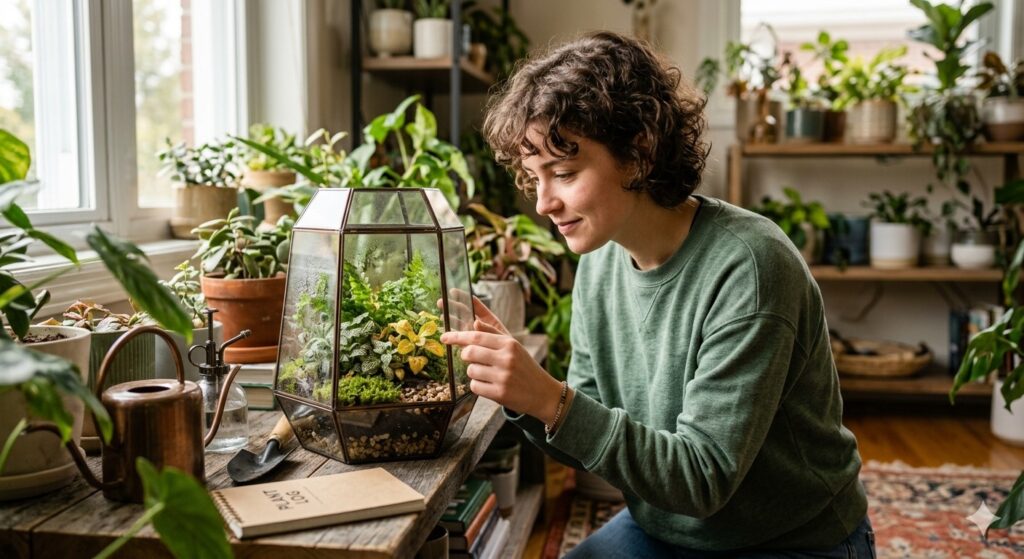
Check the soil, if it feels soggy or you can see water pooling at the bottom, that’s a clear sign. You might also notice the soil smells a bit musty, like wet earth that’s been sitting too long.
Another clue is if the yellow leaves feel soft and a little mushy when you touch them. Healthy yellowing from other causes tends to leave the leaf texture mostly intact, so this detail can really help you narrow things down.
Besides, we have an exclusive article that can help you fix your terrarium if you’ve overwatered it. You can read it here and check out some tips on what to do next.
What to do about it
First, open up your terrarium and let it air out for a day or two. Remove any visibly rotting material to prevent the problem from spreading to healthy plants.
Going forward, water much less frequently. For closed terrariums, you might only need to water every few weeks, or even less. Let the condensation guide you instead of sticking to a fixed schedule.
2. Not enough light or too much of it
Light is a big deal for terrarium plants, and getting the balance wrong in either direction can cause yellow leaves in terrarium setups pretty quickly. Too little light slows down photosynthesis, which means the plant can’t produce the energy it needs.
When a plant doesn’t get enough light, it starts shedding chlorophyll, the pigment that makes leaves green. That’s what causes the yellow color. The leaves essentially lose their “greenness” because there’s no point in maintaining it without enough light to use.
On the flip side, too much direct sunlight can also bleach leaves out. Direct sun through glass can even create a magnifying effect, scorching leaves and turning them yellow or pale in a very different way than low light does.
Finding the right light balance
Most terrarium plants do best in bright, indirect light. A spot near a window that gets filtered light throughout the day is usually ideal. Avoid placing your terrarium in direct sunlight for extended periods.
If you’re using artificial lighting, make sure the light is on for around 10 to 12 hours a day and positioned close enough to actually benefit the plants. A timer can help keep things consistent without you having to remember.
Signs it’s a light issue
With low light, yellowing usually starts with the older leaves at the base of the plant. With too much sun, you’ll often see pale or washed-out patches on the parts of leaves that face the light source directly.
Pay attention to where the yellowing starts and how it spreads, that pattern tells you a lot. Also consider how recently the light conditions changed, since plants often respond a week or two after the shift happens.
3. Nutrient deficiency
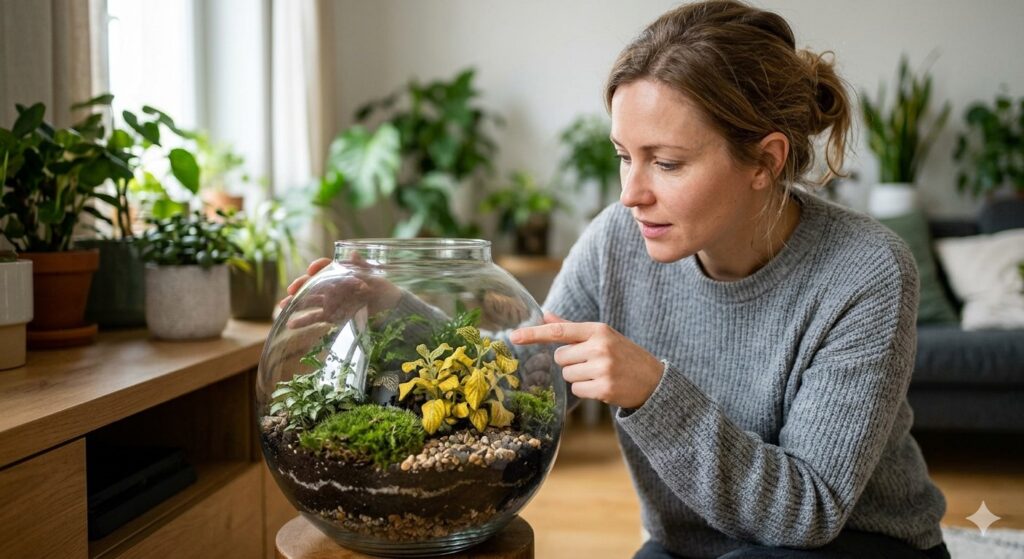
Here’s something a lot of terrarium beginners don’t think about: plants need nutrients, and over time, even the best soil starts to run low. Nutrient deficiency is another reason you might be seeing yellow leaves in terrarium environments, especially in setups that have been running for a year or more.
The most common deficiency is nitrogen, which causes older leaves to yellow first. But iron and magnesium deficiencies are also pretty common and tend to show up differently, usually as yellowing between the veins of newer leaves while the veins stay green.
| Deficiency | Where yellowing appears | Other signs |
|---|---|---|
| Nitrogen | Older, lower leaves first | Slow growth, pale overall color |
| Iron | New leaves, between veins | Veins stay green (chlorosis) |
| Magnesium | Older leaves, between veins | Leaves may curl or drop |
| Potassium | Leaf edges and tips | Browning edges, weak stems |
How to add nutrients safely
In a terrarium, you want to be careful with fertilizers, less is always more. A diluted liquid fertilizer at around a quarter of the recommended dose works well and reduces the risk of burning roots or disrupting the ecosystem.
Slow-release granules placed carefully into the soil are another option, especially for larger open terrariums. Just avoid over-applying, as excess nutrients can cause their own set of problems like salt buildup in the soil.
Choosing the right fertilizer
Look for a balanced fertilizer with equal or near-equal amounts of nitrogen, phosphorus, and potassium. For terrariums with a lot of foliage plants, leaning slightly higher in nitrogen can help maintain that lush green look.
If your plants are showing the veining pattern typical of iron deficiency, you can find chelated iron supplements specifically for this. Just add them sparingly and monitor how your plants respond over the next couple of weeks.
4. Temperature stress
Plants are sensitive to temperature changes, and your terrarium’s glass walls don’t always protect them from the extremes. Temperature stress is a surprisingly common cause of yellow leaves in terrarium setups, and it often gets overlooked because we don’t always think of our indoor spaces as having temperature swings.
Cold drafts from windows or air conditioning vents can shock plants quite easily. Likewise, being placed too close to a heat source (a radiator, a sunny wall, or even a warm appliance) can cause stress that shows up as yellowing.
Signs your terrarium is too hot or too cold
If your terrarium is too cold, you might notice that the soil stays wet longer than usual, because cold slows down evaporation and plant activity. Leaves can yellow and drop, and growth will slow or stop altogether.
Too much heat, on the other hand, can cause rapid wilting followed by yellowing, especially if the terrarium is also drying out faster. The plants essentially start shutting down non-essential functions to conserve energy.
The sweet spot for most terrarium plants
Most tropical terrarium plants thrive between 18°C and 26°C (roughly 65°F to 79°F). Try to keep your terrarium away from spots where temperatures fluctuate a lot throughout the day.
Additionally, if you live in a place with very cold winters or very hot summers, think about how that affects the room where your terrarium lives. Small adjustments to placement can make a really big difference for your plants.
5. Pests hiding in plain sight
Pests might be small, but their impact on your plants can be massive and yellow leaves in terrarium environments are one of the first symptoms they cause. Spider mites, fungus gnats, and aphids are among the most common unwanted visitors.
What makes pests tricky in a terrarium is that the humid, enclosed environment can actually encourage their spread. By the time you notice the yellowing, there’s a good chance the pests have already been at work for a while..
Common terrarium pests to watch for
- Spider mites: tiny, often red or brown dots that spin fine webbing on leaves
- Fungus gnats: small flies hovering around the soil; their larvae damage roots
- Aphids: soft, pear-shaped insects clustered on stems and new growth
- Mealybugs: white, cotton-like clusters at leaf joints and under leaves
How to deal with pests
For most pests, neem oil diluted in water and applied with a small spray bottle is a gentle and effective treatment. Make sure you get the undersides of leaves, where pests love to hide.
For fungus gnats specifically, letting the topsoil dry out between waterings really helps, since their larvae need moisture to survive. You can also use sticky traps placed near the terrarium to catch adult gnats before they lay more egg
Keep reading: a warm suggestion for you
If yellowing leaves got you thinking more carefully about your terrarium environment, you’ll want to check out our article on terrarium temperature next. Temperature and plant health go hand in hand more than most people realize.
In that article, we break down exactly what temperatures are safe for common terrarium plants, which ones struggle in the cold, and which plants can handle a bit more heat without any issues at all.
You’ll also find practical tips for measuring and adjusting the temperature inside your setup, even if you’re working with a small terrarium or a tight budget for accessories and gear.
Go ahead and read “Terrarium temperature: what’s too hot or cold?”, it pairs really well with everything you just learned here, and it’ll help you make sure your terrarium stays a happy place for your plants!