
Don’t know what to place at the heart of your terrarium? Now you can finally nail that perfect centerpiece look!
If you’ve ever stared at your terrarium wondering why something feels “off,” the culprit is usually a missing terrarium focal point. That single element that anchors the whole composition and gives it purpose.
A well-chosen centerpiece gives your mini landscape a real sense of intention. Even a casual observer will immediately feel the difference when something confident is drawing the eye in naturally.
The good news is you don’t need a design background to get this right. You just need to know which types of elements work and how to place them inside your specific container and style.
By the end of this article, you’ll have a clear idea of what fits your style, your plants, and your space. So let’s get into it together and figure this whole thing out!
Why your terrarium needs a visual anchor
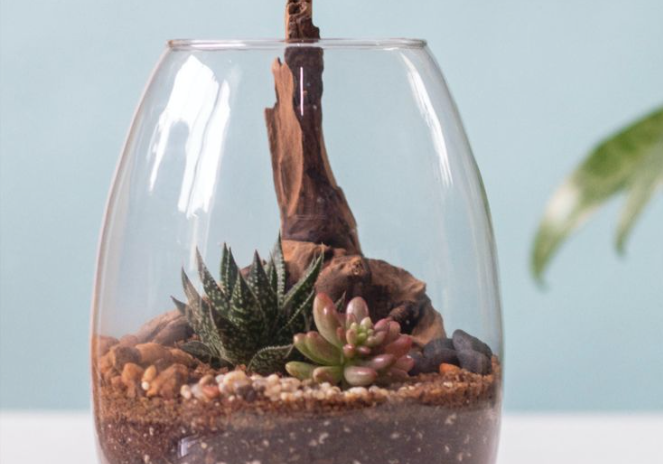
Think about the last time a terrarium truly stopped you mid-scroll; that magic often comes from one powerful terrarium focal point that pulls the whole composition together into a single, coherent, and beautiful scene.
That’s the power of a well-placed centerpiece. It creates what designers call visual hierarchy, which simply means your eye knows where to look first. Without one, the gaze wanders, and the display can feel flat.
A focal point also makes the rest of your design surprisingly easy to build. Once you’ve committed to that central element, everything else (ground cover, filler plants, secondary textures) falls naturally into place around it.
Interestingly, a focal point gives your terrarium a sense of narrative too. It’s the main character in your little landscape, and everything around it plays a supporting role. That intentionality is what people genuinely respond to.
The main types of focal points to consider
There’s genuinely no single correct answer here. The best choice depends on your terrarium’s style, the plants you’re working with, and the overall mood you want to create for whoever stops to look at it.
Rocks and stones
Rocks are among the most popular centerpiece choices, and it’s easy to understand why. They’re low-maintenance, they add height and rich texture, and they look equally at home in tropical or desert-style terrariums.
Dragon stone, lava rock, and seiryu stone are all excellent picks. Dragon stone has jagged, otherworldly edges; lava rock is warm and porous; seiryu stone reads almost like a miniature grey mountain range.
When using a rock as your focal piece, aim for something roughly one-third to one-half the height of your container. Too small, it disappears into the scene; too large, and it overwhelms everything else around it.
Position that rock slightly off-center, following the classic rule of thirds. This terrarium focal point placement trick immediately makes the whole composition feel more intentional. You can also check out a complete post on how to style terrarium rock here!
Driftwood and branches
Driftwood brings an aged, organic quality that’s genuinely hard to replicate with anything else. A twisted piece rising out of mossy ground cover can look like a tiny ancient forest — it’s storytelling through design.
Sandblasted grapevine wood is especially popular for closed terrariums since it resists mold better than raw wood. Spider wood has a dramatic branching structure that creates gorgeous shadows and rich layers of visual depth.
In tall terrariums, driftwood that reaches upward gives the composition a real sense of vertical movement. Pair it with low-growing plants like fittonia or baby’s tears, and the contrast becomes genuinely striking.
Therefore, always use properly treated or aquarium-safe wood, this keeps your terrarium focal point beautiful long-term and protects the closed ecosystem from unwanted organisms that raw, untreated wood can sometimes introduce.
Statement plants as your centerpiece
Sometimes the most effective centerpiece is simply the right plant placed confidently in the right spot. A single dramatic plant (taller, more textured, or more vividly colored than its neighbors) can anchor everything on its own.
For open terrariums, consider haworthia, aloe, or a sculptural cactus with an interesting form. For closed builds, a miniature tree fern, a patterned begonia, or a bold bromeliad can each carry the center confidently.
The key is contrast: your focal plant should look noticeably different from the surrounding planting in height, color, or leaf shape. That visual difference is what naturally pulls the eye toward the center of your design.
How to position your focal point for maximum impact
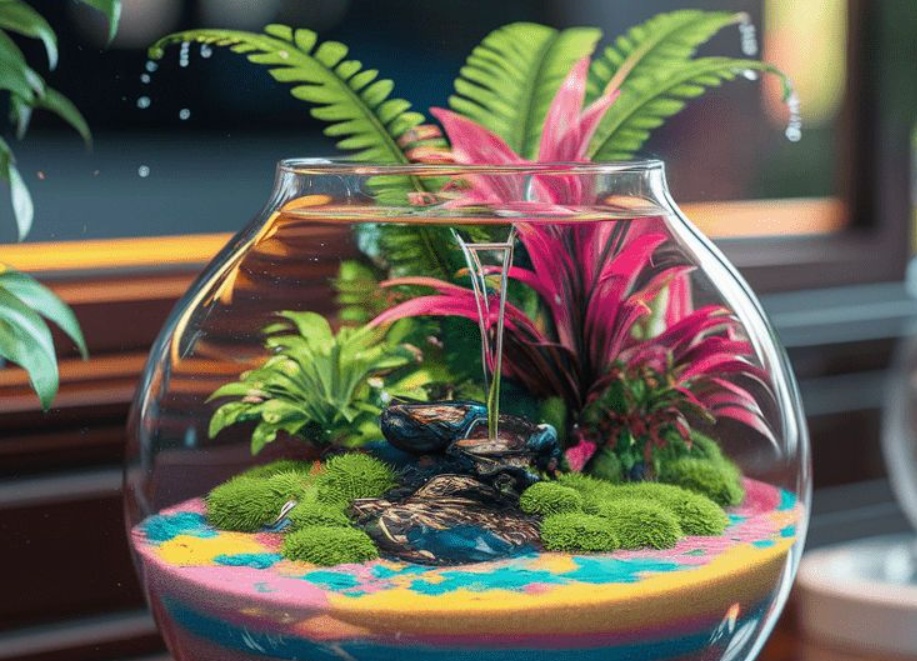
Placement is every bit as important as the element itself, understanding where to set your terrarium focal point is the step that separates a thoughtfully designed display from a random arrangement of beautiful individual things.
Even the most striking piece of driftwood won’t do its job if it’s buried among competing elements or pushed into an awkward corner. Position always matters more than you’d initially think when building.
The rule of thirds in terrarium design
The rule of thirds is a simple guideline borrowed from photography and visual art. Divide your terrarium into a 3×3 grid, your focal element works best near one of the four intersection points of that grid.
Placing your centerpiece slightly off-center immediately makes the design feel more intentional and less rigid. It also gives supporting elements — smaller plants, ground cover, secondary decorations — room to breathe and complement each other well.
Building depth around your centerpiece
Use taller plants or elements behind your focal piece to create a natural backdrop. Place lower, spreading plants up front to add depth and visual layering so the eye travels through the whole terrarium scene naturally.
This layered approach gives your terrarium focal point a genuine stage to perform on — the more contrast there is between the centerpiece and its surroundings in height and texture, the more powerfully it reads overall.
This technique works especially well in rectangular containers, where you have a clear front and back to play with. In round bowls, simply vary heights all around the central element for a similar effect.
Creative ideas for every terrarium style
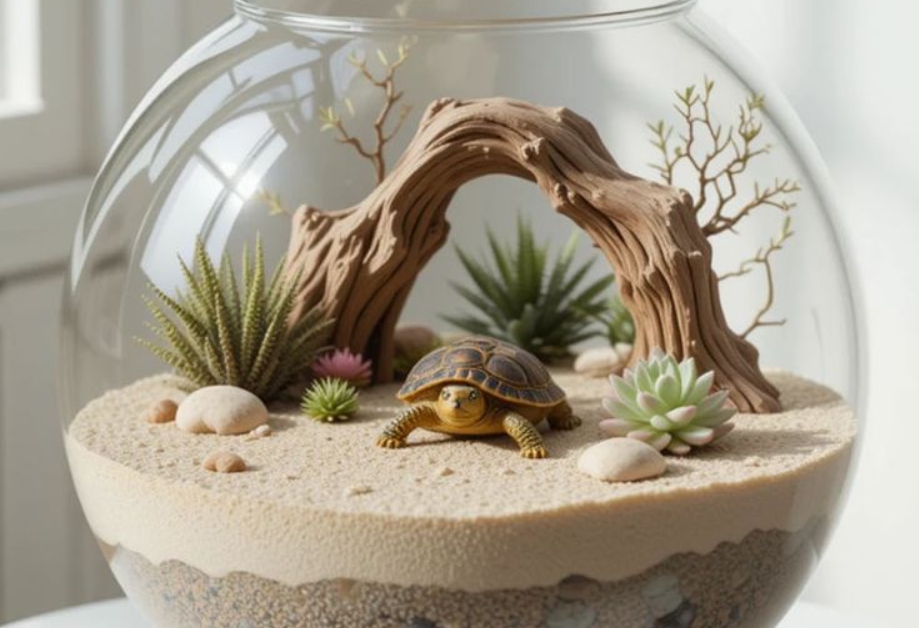
The right choice depends entirely on the mood you’re after and there’s truly no wrong answer, as long as your chosen element stands out clearly from everything surrounding it.
Miniature figurines and decorative objects
If you love the idea of a tiny narrative inside your build, a miniature figurine makes a brilliant terrarium focal point, a ceramic fox, resin fairy, or tiny wooden cabin immediately becomes a story that visitors can’t stop exploring.
The key with figurines is scale and restraint. One well-chosen piece works infinitely better than several competing ones. Let it be the clear star, and surround it with plants and materials that feel proportionate and appropriately supportive.
Crystals and gemstones
Crystals are having a real moment in terrarium design, and honestly the appeal makes total sense. A cluster of amethyst or some clear quartz points add a jewel-like quality, especially in open terrariums where light reaches them.
They work particularly well in desert-style setups with succulents and sand, but crystals also look gorgeous rising out of lush moss in naturalistic designs. The contrast between geometric crystal faces and soft organic plants is genuinely beautiful.
Just double-check that your crystals aren’t reactive to moisture if you’re placing them in a closed, humid environment. Your terrarium focal point should stay stunning for years, and some minerals can be slowly affected by prolonged dampness.
Themed terrariums and focal points
Themed terrariums — jungle, desert, fairy garden, zen — benefit enormously from a centerpiece that reinforces the theme. In a zen-inspired design, a single carefully placed rock with raked sand around it does all the visual work.
In a jungle theme, dramatic driftwood draped with climbing plants tells the whole story at a glance. A well-chosen piece of driftwood, stone, or plant life becomes the whole theme — you’ll know it’s right immediately.
Don’t overlook themed props either: a tiny lantern, a wooden torii gate, or a little handmade bridge can all serve as your focal anchor in narrative-style builds. Just remember, one piece, not five competing for attention.
Mistakes that undermine your centerpiece
Even with a great element chosen, a few common slip-ups can undo the whole design. Here are the ones most worth keeping in mind before you start building.
- Choosing something too small. Your focal element needs to be proportionate to your container. A tiny pebble in a large tank reads as an afterthought, not a true centerpiece.
- Adding too many competing elements. A focal point only works when there’s visual contrast. If everything is the same height and texture, nothing stands out clearly.
- Placing it dead center. Off-center placement almost always feels more natural and dynamic. Save the symmetrical approach for specific container shapes that genuinely call for it.
- Ignoring negative space. Empty space around your centerpiece is what allows the eye to land and actually appreciate the main element properly.
- Overcrowding the base. Let the area immediately surrounding your focal piece breathe. A bit of open ground cover is far more effective than piling in more small plants at the base.
Also worth reading: terrarium background ideas
So your focal point is sorted! Well done! Now, naturally, the eye tends to travel toward the back of your terrarium next. That background layer is just as important as your centerpiece in creating a display that feels truly complete.
A thoughtfully designed backdrop can make even a shallow container feel like a whole immersive world. It adds the kind of depth that makes people lean in for a closer look, which is exactly what a great terrarium should always do.
There’s a fantastic article waiting for you that covers exactly this next step: “Terrarium background ideas to add real depth“. It explores natural materials, foam sculpting, printed panels, and painted techniques that are far more accessible than they might first look.
Head over and give it a read, you’ll come away with everything you need to bring that back wall to life. Together with a strong focal point, a beautifully designed background transforms your terrarium into something truly unforgettable and complete.