
Your plants are alive, your glass is fogged up, and now you’re wondering if you’re actually feeding your terrarium right.
Caring for a terrarium is one of those hobbies that feels simple on the surface but hides a surprising amount of nuance beneath the surface. Terrarium fertilizer is one of the most misunderstood topics among plant lovers, and it’s easy to see why.
Most people assume that what works in a regular pot must work in a glass enclosure. But terrariums are closed or semi-closed systems, which changes a lot about what happens to nutrients over time.
Too much fertilizer in a terrarium can throw the whole ecosystem off balance, causing algae explosions, root burn, and plants that grow way too fast for the space. That’s a common mistake, even among experienced hobbyists.
But ignoring nutrition entirely isn’t the right move either. Some setups genuinely need a boost, especially open terrariums with fast-growing plants or thin substrate layers. So let’s break it all down.
What fertilizer actually does in a terrarium
Fertilizer adds nutrients to the growing medium (primarily nitrogen (N), phosphorus (P), and potassium (K), plus trace minerals). In outdoor gardens, rain and soil organisms constantly replenish these. Inside a terrarium, though, the system is sealed or mostly sealed.
In a healthy, well-built closed terrarium, decomposing organic matter cycles nutrients back to the plants naturally. Bacteria and fungi break down dead leaves and plant debris, and that nutrition feeds the roots again. It’s a slow but steady loop.
Open terrariums don’t benefit from the same recycling effect. They lose moisture faster and have more airflow, which means nutrients can deplete over time, especially in shallow substrates or setups that have been growing for more than a year.
Understanding these differences is the first step to making a smart decision about fertilization. Terrarium fertilizer isn’t automatically helpful or harmful, it all depends on the type of enclosure you have and what’s growing inside.
Closed terrariums: do they actually need fertilizer?
Closed terrariums work differently from almost any other growing environment, and that’s exactly why the fertilizer question gets so complicated with them. Before diving into the specific scenarios, it helps to understand the basic dynamic at play inside a sealed glass container.
In short, a well-built closed terrarium can be remarkably self-sufficient, but “self-sufficient” doesn’t always mean “perfect.” There are situations where things go off track, and knowing how to spot them makes all the difference.
Want to know which one is best for you, open or closed terrarium? There’s a complete article comparing both for you. Click here and check it out!
The self-sustaining argument
Closed terrariums are often described as mini ecosystems, and that’s genuinely accurate. When the lid is on, water condenses and falls back down, organic material breaks down, and nutrients re-enter the soil. The cycle repeats continuously.
Plants inside closed terrariums are also typically slow growers, mosses, ferns, and small tropical species that don’t demand heavy feeding. These plants evolved in nutrient-poor forest floors and do just fine without a lot of extra input.
When things stop cycling properly
Even so, there are situations where a closed terrarium’s natural cycle starts to break down. If there aren’t enough microbial organisms in the substrate, decomposition slows down and nutrients don’t return to the plants efficiently.
New terrariums especially can struggle with this, the microbial community hasn’t had time to establish itself. In those cases, a very light, diluted dose of fertilizer can help bridge the gap while the ecosystem finds its footing.
Signs your closed terrarium might need a nudge
Yellowing leaves on plants that are otherwise healthy, slow growth over a long period, and pale or washed-out foliage can all point to nutrient deficiency. However, these symptoms can also indicate poor lighting or overwatering, so rule those out first.
If you’ve confirmed that light and moisture are fine but the plants still look flat and unhappy, a diluted liquid fertilizer, at about one-quarter the recommended dose, applied very occasionally might help. Once every two to three months is usually enough.
Open terrariums and the fertilizer question
Open terrariums behave much more like traditional potted plants. There’s no sealed water cycle, nutrients are lost through evaporation and watering, and plants — often succulents, cacti, air plants, or fast-growing tropical varieties — tend to have bigger appetites.
For these setups, terrarium fertilizer makes more practical sense. Still, the golden rule applies: less is more. Over-fertilizing causes salt buildup in the substrate, which damages roots and creates a toxic growing environment that’s hard to fix inside a glass container.
A diluted balanced fertilizer applied during the growing season (typically spring through early autumn) every four to six weeks works well for most open terrariums. Slow-release granular fertilizers tucked into the substrate are another option, as they release nutrients gradually without causing spikes.
Always water before fertilizing and never apply fertilizer to dry soil. The moisture helps distribute nutrients evenly and reduces the risk of root burn. A very real concern in the compact, confined space of a terrarium.
Choosing the right type of terrarium fertilizer
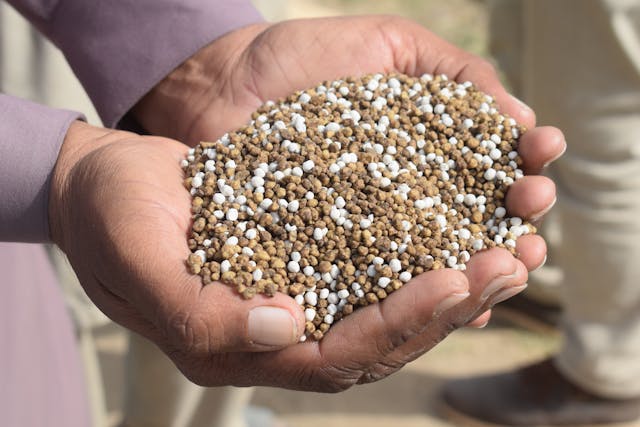
Not all fertilizers behave the same way once they’re inside a glass container, and what works brilliantly in a garden bed can cause real problems in a terrarium. The format, concentration, and ingredients all matter more than you’d expect in such a small, enclosed space.
So, before you reach for whatever’s on the shelf, it’s worth understanding the main options available and what each one actually does in a terrarium context.
Liquid fertilizers
Liquid fertilizers are the most popular choice for terrariums because they’re easy to dilute and control. You can adjust the concentration based on your plants’ needs, which gives you a lot of flexibility. Always dilute more than the label suggests usually to about a quarter of the standard strength.
Look for a balanced formula (like 10-10-10 or 20-20-20) unless your plants have specific needs. For example, flowering plants benefit from higher phosphorus, while foliage plants tend to prefer a nitrogen-forward mix.
Slow-release granules
Slow-release granules sit in or on top of the substrate and dissolve gradually over several months. They’re convenient and reduce the risk of over-application, which makes them a decent choice for beginners or people who don’t want to track fertilizing schedules closely.
The downside is that you have less control once they’re in there. If something goes wrong (like nutrient overload) it’s harder to fix quickly. Use them sparingly and choose a low-concentration formula whenever possible.
What to avoid
When it comes to terrarium fertilizer, knowing what to skip is just as important as knowing what to use. Here are the main things to steer clear of.
- High-concentration fertilizers for outdoor gardens: these are formulated for large soil volumes and will almost certainly over-feed your terrarium plants.
- Products with wetting agents: these can disrupt your drainage layer and encourage mold growth inside the enclosure.
- Organic liquid fertilizers with strong smells (like fish emulsion or seaweed extract): especially in closed terrariums, a fishy smell trapped under glass is unpleasant and hard to air out quickly. If you do use them, go for the mildest formula you can find.
Special cases: what about specific plant types?
One of the most useful things to know is that different terrarium plants have very different relationships with fertilizer. A one-size-fits-all approach tends to backfire here, because what feeds a tropical fern beautifully could genuinely harm a carnivorous plant.
The table below gives you a quick overview of the most common terrarium plant types, how much fertilizer they typically need, and a simple suggested approach for each one.
| Plant type | Fertilizer need | Suggested approach |
|---|---|---|
| Mosses | Very low | Usually none needed |
| Ferns | Low to moderate | Diluted liquid, 2–3x per year |
| Succulents & cacti | Low | Half-strength, once in spring |
| Air plants (Tillandsia) | Low | Bromeliad fertilizer, monthly misting |
| Tropical foliage | Moderate | Diluted liquid every 4–6 weeks |
| Carnivorous plants | None | Never fertilize — they source their own |
Carnivorous plants deserve a special mention: they’ve adapted to nutrient-poor environments and fertilizer can genuinely kill them. If you have sundews, pitcher plants, or Venus flytraps in your terrarium, keep fertilizer far away from that setup entirely.
Air plants (Tillandsia) are another special case. They absorb nutrients through their leaves, not their roots, so liquid terrarium fertilizer is added to the misting water rather than the substrate. Use a bromeliad-specific fertilizer diluted to about one-quarter strength.
How to apply fertilizer safely in a terrarium
Even if you’ve chosen the right product for your plants, application still matters enormously. The way you introduce fertilizer into a terrarium can mean the difference between a healthy boost and a slow-motion disaster that takes weeks to diagnose.
There are a few straightforward principles that apply to almost every setup, and following them consistently will save you a lot of headaches in the long run.
Dilution and frequency
The most important rule with terrarium fertilizer application is to always err on the side of less. Plants in a terrarium can’t be flushed easily if you overdo it, there’s nowhere for the excess to drain cleanly. Start light, observe the response, and increase only if needed.
For liquid fertilizer, mix it at about one-quarter of the label’s recommended concentration. Apply it by misting onto the soil surface or watering it in slowly, making sure the substrate is already moist before you start.
Watching for warning signs
After applying fertilizer, watch your plants for the next two to three weeks. White crusty deposits on the soil surface can indicate salt buildup from over-fertilization. If you see this, hold off on any further feeding and increase the water slightly to help dilute the salts.
Leaf tip burn (where the edges of leaves turn brown and crispy) is another common sign of too much fertilizer. It often appears quickly after application. If that happens, don’t fertilize again for at least two to three months and consider flushing with plain water if possible.
Keeping moss tidy without damaging it
Moss is one of the trickiest things to trim in a terrarium because it doesn’t respond to cutting the same way a leafy plant does. Rather than cutting it like you would a stem plant, the goal with moss is more about controlling its spread and removing any dead or brown sections.
Use your scissors to trim along the edges where moss is encroaching on other plants or creeping up the glass.
For the top surface of the moss carpet, a light trim with small scissors can help keep it even and prevent it from getting too thick and dense, which traps moisture and can cause rot underneath.
Reading recommendation: terrarium pests
If you’ve been spending time getting your fertilization routine right, you’ll want to make sure tiny uninvited guests don’t undo all your hard work. Terrarium pests can be subtle at first but surprisingly destructive if left unchecked and they’re more common than most people expect.
Take a look at our article “Terrarium pests: tiny bugs and how to beat them”, where we walk through the most common critters that show up in glass gardens. You’ll find it really useful.
We go into detail about how to identify what you’re dealing with, which pests are actually harmless (or even beneficial!), and what to do when something genuinely needs to be treated.
It’s a practical, no-panic guide for terrarium keepers at any level. Head over and give it a read! Your plants will thank you for it!