
Fogged-up glass, soggy soil, wilting plants: find out what your terrarium is really telling you!
You’ve set up your terrarium and now you’re staring at foggy glass, wondering what’s wrong. Terrarium condensation is one of the first things new hobbyists notice, and easily the most misunderstood.
A little fogging on the walls is normal and even expected, especially in closed setups. But there’s a real difference between healthy moisture cycling and a swampy ecosystem slowly suffocating your plants.
Knowing how to read those droplets can save you a lot of headaches and a lot of plants. Light morning mist means something different from glass that drips all day without ever clearing up.
Here, you’ll learn to tell healthy from excessive condensation, understand what causes it, and, most importantly, know exactly how to fix it before things get out of hand.
What condensation in a terrarium actually means
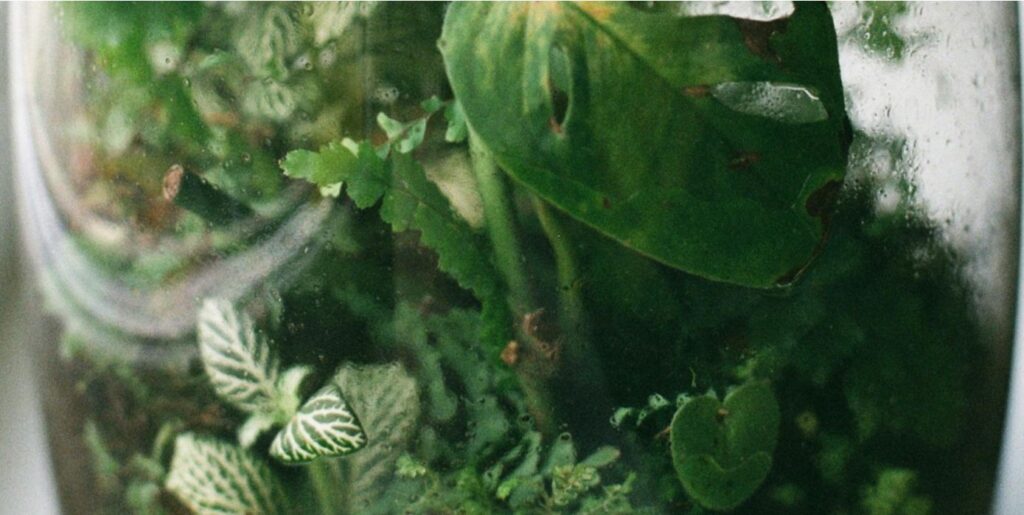
Condensation happens when warm, moist air meets a cooler surface, in this case, your terrarium glass. Inside a closed terrarium, water evaporates from the soil and plants, rises, hits the glass walls, and drips back down.
That’s the water cycle in miniature, and it’s genuinely beautiful when it’s working right. In an open terrarium, you’ll see far less of it, since moisture escapes into the room. But even open setups can develop condensation if they’re overwatered or placed in a humid spot.
What’s normal condensation?
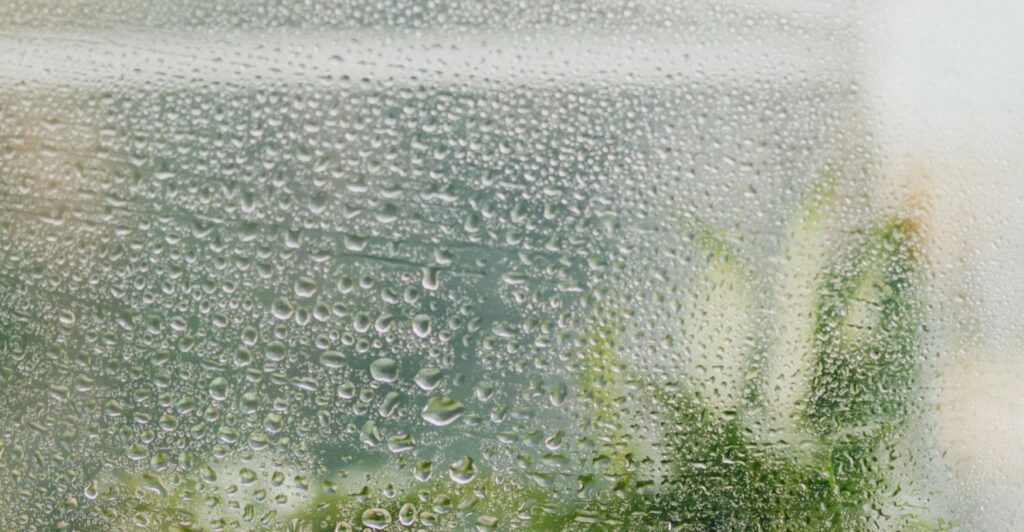
Healthy condensation in a closed terrarium looks like light fogging or small droplets, usually appearing in the morning when temperatures shift. By afternoon, when the air inside warms up, that misting typically clears on its own.
If you can still see your plants clearly through the glass, even with some droplets, you’re probably in good shape. The ecosystem is cycling moisture the way it should, and your plants are doing their thing.
What’s too much condensation?
When the glass is completely opaque with water, stays that way all day, or when you see puddles forming at the base, that’s a red flag. Excessive terrarium condensation usually points to overwatering, poor drainage, or both working against you at the same time.
Too much moisture creates the perfect conditions for mold, root rot, and fungus gnats. Plants that sit in soggy soil for too long start to decline, yellowing leaves, mushy stems, and that unpleasant sour smell are all signs that things have gone too far.
The most common causes of too much condensation
Understanding why your terrarium is dripping everywhere makes it a lot easier to fix. Most of the time, excessive condensation comes down to a few predictable culprits.
Overwatering
Overwatering is by far the most common cause. It’s easy to do, terrariums don’t need nearly as much water as you might think, especially closed ones. Even a small amount of excess water gets trapped inside and keeps cycling, building up over time.
A good rule of thumb: water only when the soil feels dry about an inch down. For closed terrariums, you may only need to water once a month or even less if condensation is already visible.
Poor or missing drainage layer
Without a drainage layer, excess water has nowhere to go except to sit in the soil. This leads to waterlogged roots and, you guessed it, persistent heavy terrarium condensation that won’t let up no matter how long you wait. You can learn all about the drainage layer in our article here.
A proper drainage layer (gravel, LECA, or perlite at the base) allows water to pool safely below the soil line. Adding a mesh or activated charcoal layer between drainage and soil helps even more by absorbing excess moisture and odors.
Wrong plant choices
Some plants simply aren’t suited to high-humidity environments. If you’ve mixed tropical moisture-lovers with succulents or cacti in a closed setup, someone’s going to struggle, usually the succulent, which will rot before you realize what happened.
Sticking with plants that share similar humidity needs is one of the easiest ways to prevent condensation problems before they start. Ferns, mosses, and tropical foliage tend to thrive together in closed terrariums. Succulents and arid plants do better in open ones.
How to fix excessive condensation step by step
If your terrarium is dripping too much, don’t panic. Most condensation problems are fixable without starting over from scratch, as long as you catch them early enough.
Step 1: stop watering immediately
The first thing to do is simply stop adding water and give your terrarium time to breathe. Letting it dry out naturally is often enough if you caught things early.
Don’t be tempted to add “just a little” water to compensate, resist that urge. Even a small amount keeps the cycle going and delays the recovery your terrarium actually needs.
Step 2: open the lid
If your terrarium has a lid, take it off for a few hours each day to let excess moisture escape. Even a short window of airflow makes a noticeable difference over time.
Repeat this daily for at least a week and watch the condensation levels gradually drop. Once the glass looks clearer and the soil feels less saturated, you can start closing the lid again.
Step 3: check the drainage layer
Look closely at the base of your terrarium. If there’s no drainage layer, water has nowhere to go but deeper into the soil and that’s a problem you’ll need to address directly.
Carefully repotting your plants with a proper gravel or LECA layer at the bottom is the most effective long-term fix. It’s a bit of work, but it prevents the same issue from coming back.
Step 4: remove any rotting material
Dead leaves, decaying moss, and rotting roots all release moisture and make things worse. Go through your terrarium carefully and clear out anything that looks brown, mushy, or slimy.
Beyond the moisture issue, rotting organic matter also introduces mold and bacteria that can spread quickly. Removing it promptly protects the healthy plants that are still doing well.
Step 5: reposition the terrarium
Direct sunlight heats the interior rapidly and pushes moisture levels up fast. Moving your terrarium to a spot with bright, indirect light usually helps stabilize things considerably.
Additionally, keep it away from heat sources like radiators or vents. Stable temperatures mean a more predictable water cycle and far fewer condensation surprises to deal with.
Reading condensation patterns to fine-tune your setup
Once you’ve handled the immediate problem, it’s worth paying attention to condensation as an ongoing indicator of your terrarium’s health. It tells you a lot more than just “too wet” or “just right.”
Morning mist is your friend
Light condensation that appears in the morning and clears by midday is the gold standard. It means your water cycle is working, your plants are transpiring, and moisture levels are balanced. If you see this pattern consistently, your terrarium condensation is healthy, leave it alone.
Trying to eliminate all condensation in a closed terrarium is actually counterproductive. These ecosystems need humidity to function, and plants like ferns and mosses depend on it to stay hydrated between waterings.
Persistent all-day fogging needs attention
If the glass stays fogged from morning to night, the air inside is oversaturated. This usually means there’s too much standing water somewhere — either in the soil, the drainage layer, or both — and airflow is insufficient to work through it.
Try opening the lid for two to four hours a day for a week. If the persistent fogging clears up, you’ve confirmed the diagnosis. If it doesn’t budge, you likely need to address drainage or remove excess water from the substrate.
No condensation at all can also be a problem
A terrarium that never shows any condensation, especially a closed one, might be too dry. Completely clear glass in a sealed setup often means the soil is parched and the water cycle has stalled.
In that case, a light misting (emphasis on light) can help restart things. Add just a small amount of water, replace the lid, and watch over the next day or two to see if healthy condensation returns.
Terrarium condensation by type: closed vs. open
Not all terrariums behave the same way, and what’s normal for one setup might be alarming in another. Here’s a quick comparison to help you calibrate your expectations.
| Feature | Closed terrarium | Open terrarium |
|---|---|---|
| Expected condensation | Moderate daily misting | Minimal to none |
| Watering frequency | Every 2–4 weeks (or less) | Every 1–2 weeks |
| Humidity level | High (70–90%) | Low to moderate |
| Most at-risk plants | Succulents, cacti | None (more forgiving) |
| Condensation = overwatering? | Not always | Usually yes |
Closed terrariums are self-regulating by design, so some terrarium condensation is built into how they work. Open terrariums, on the other hand, shouldn’t be showing persistent moisture on the glass at all, if they are, you’ve almost certainly overwatered.
Preventing condensation problems before they start
Prevention is genuinely easier than fixing an already-soggy terrarium. A few habits make a big difference over time and save you from a lot of frustration down the line.
- Build it right from the start: use a proper substrate mix with drainage built in, add activated charcoal, and choose plants with compatible humidity needs. Getting the foundation right means you’ll deal with far fewer problems later.
- Water mindfully: use a spray bottle or a small squeeze bottle with a narrow tip for precision. Less is almost always more in a closed system. When in doubt, wait. You can always add water, but removing it is a lot harder.
- Monitor regularly: check your terrarium in the morning and again in the afternoon. Consistent patterns tell you a lot. A terrarium condensation check takes thirty seconds and can catch problems before they spiral out of control.
- Adjust seasonally: indoor humidity changes throughout the year, especially if you use heating or air conditioning. Your terrarium’s needs will shift slightly with the seasons, so stay observant and adjust your watering schedule accordingly.
Also worth reading: how to rescue a terrarium that’s been overwatered
If you’ve gone past “a bit too much condensation” into genuine overwatering territory, there’s more to do. Fortunately, a waterlogged terrarium can often be rescued if you act quickly enough.
The article “Overwatered terrarium? Here’s how to save it” walks you through diagnosing damage, removing affected plants, and rebuilding your setup with proper drainage in place.
Go ahead and read it; it breaks everything down in a friendly, step-by-step way so you always know exactly what to do next, even when things look grim.
Don’t put it off, though! Acting fast gives your plants a real shot at recovery and helps restore that healthy terrarium condensation balance you’ve been working toward all along.
Once you’re no longer dealing with an overwatered terrarium, cleaning becomes simple and rewarding. Go check out that article, your setup will look and feel so much better!