
Find the best crystals and stones to transform your terrarium into a living work of art!
If you’ve ever looked at your terrarium and felt like something was missing, you’re not alone. Crystal terrarium decor is one of the easiest ways to bring color, texture, and a real sense of magic into your miniature garden.
The good news is that you don’t need to be an expert to get started. Choosing the right stones is mostly about understanding how they interact with your plants, your soil, and the overall vibe you’re going for.
There are so many options out there! Like rough raw chunks or even polished smooth pieces. And each one brings something different to the table. It’s all about finding the combination that feels right for your specific setup.
Once you start exploring, you’ll quickly realize that the world of decorative stones is surprisingly deep and exciting. The more you learn, the easier it becomes to make choices that look intentional and beautiful.
Why stones matter in a terrarium
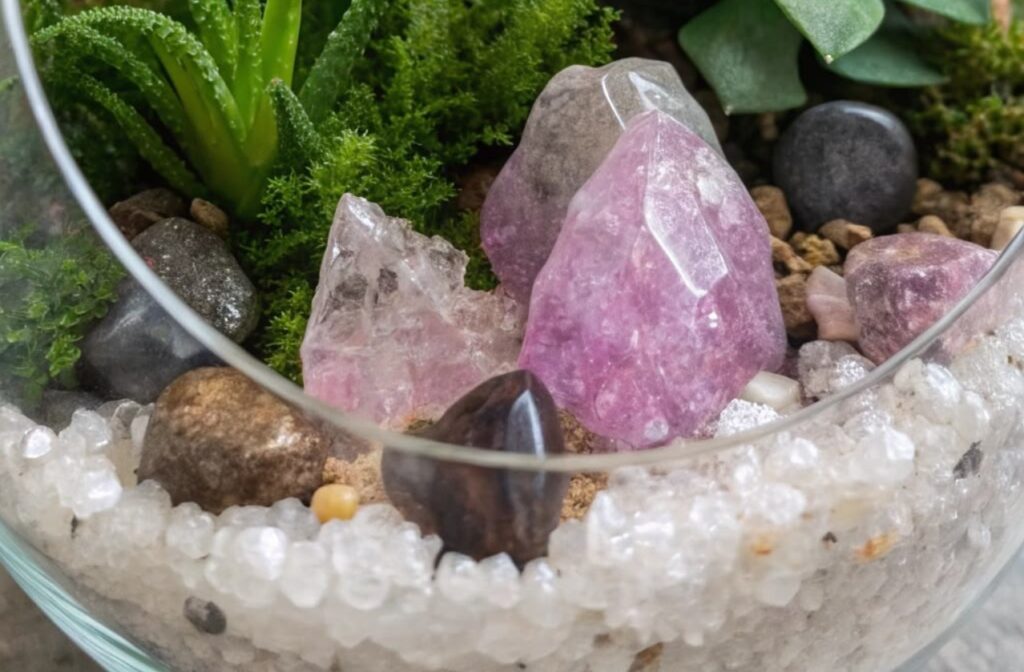
Adding stones to a terrarium goes way beyond aesthetics, though the visual impact alone is hard to argue with. Stones can help with drainage, support soil structure, and even influence the humidity levels inside your enclosure.
Furthermore, the right stones create a sense of scale and naturalism that makes your terrarium feel like a real tiny ecosystem rather than just a glass box with some plants in it. That contrast between rough mineral surfaces and soft greenery is incredibly pleasing to the eye.
Decorative crystals, in particular, bring an extra layer of personality. Their natural color variations, reflective surfaces, and unique shapes make every placement feel like a little design decision and that’s a big part of what makes this hobby so satisfying.
Crystal terrarium decor works especially well when you mix stone types. Combining a few polished pieces with some raw, rough-edged ones creates visual depth and keeps things from looking too uniform or staged.
What to consider before choosing your stones
Before you go shopping, it’s worth thinking about a few key factors. Not every crystal plays well with every terrarium environment, so a little planning goes a long way.
pH and water safety
Some stones can actually alter the pH of your soil or water over time. Calcite-based minerals like limestone, for example, can raise pH levels which is great for some setups but harmful for acid-loving plants.
Always research the chemical properties of any stone before placing it in a terrarium with live plants. When in doubt, rinse your stones thoroughly and look up whether they’re classified as inert materials.
Size and scale
The size of your stones should feel proportional to the overall size of your terrarium. Oversized chunks can overwhelm a small setup, while tiny pebbles can get lost in a larger scene.
A good rule of thumb is to have a range of sizes. One or two statement pieces and several smaller accent stones. This creates a layered, natural look that feels balanced without being too symmetrical.
Color harmony
Think about the color palette of your terrarium as a whole. Do your plants lean green and lush? Try contrasting with warm amber or purple tones. Going for a desert vibe? Sandy beige tones with occasional pops of teal or pink can be stunning.
Crystal terrarium decor gives you a lot of flexibility here, since crystals come in nearly every color imaginable. Taking a little time to plan your palette before buying can save you from ending up with a mismatched collection! Find out more tips on terrarium color themes here!
The best crystals and stones for your terrarium
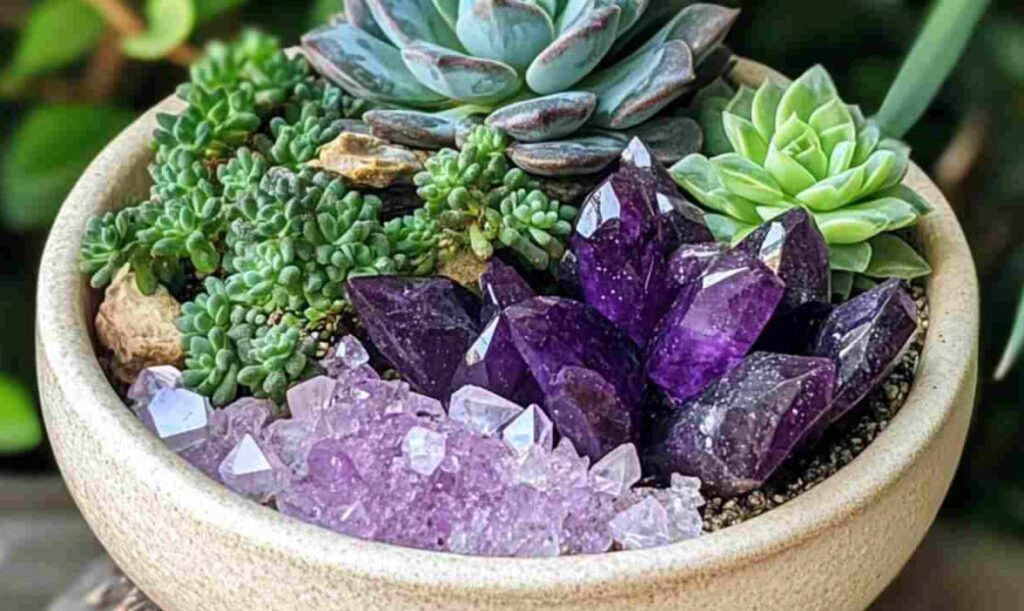
Here’s where it gets really fun. Below you’ll find some of the top choices for crystal terrarium decor, along with why each one works so well in a miniature garden setting.
Amethyst
Amethyst is one of the most popular choices for a reason. Its rich purple tones add instant drama to any terrarium. It works beautifully as a focal point, especially when placed near the front of the glass where light can hit it.
Raw amethyst clusters have an almost architectural quality that looks stunning next to trailing plants or mosses. They’re also quite affordable and widely available, which makes them a great starting point for beginners.
It’s worth noting that amethyst is generally inert and won’t cause chemical issues in your terrarium. That makes it a low-stress choice that’s as practical as it is beautiful.
Rose quartz
Rose quartz has a soft, warm quality that pairs wonderfully with feminine or romantic terrarium themes. Its gentle pink hue complements a wide range of plant colors, from deep greens to silver-toned succulents.
Polished rose quartz tumbles are especially lovely because their smooth surface catches the light in a gentle, diffused way. They also tend to have a satisfying weight to them, which helps anchor them in the soil.
As a bonus, rose quartz is widely considered safe for use around plants. It’s a silica-based mineral that doesn’t leach anything harmful, so you can use it confidently in both open and closed terrariums.
Clear quartz
Clear quartz is the ultimate versatile option. Its transparency means it never clashes with your color scheme. Instead, it amplifies and reflects whatever surrounds it, adding light and sparkle to the overall composition.
Crystal terrarium decor often benefits from having clear quartz as a base layer or accent, since it brightens the interior without competing with your plants or other decorative elements.
Quartz points are particularly striking when used in clusters. They create a dramatic, almost otherworldly look that transforms a terrarium from “pretty” to “wow.”
Black tourmaline
If you’re going for a moody, dramatic aesthetic, black tourmaline is your best friend. Its deep, striated appearance adds texture and weight to a terrarium, and it contrasts beautifully with bright green plants or vivid mosses.
Raw black tourmaline tends to have a columnar shape that looks almost sculptural in a terrarium setting. It’s one of those stones that looks expensive even when it’s not, a real visual punch for the price.
It’s also considered chemically inert, so it won’t interfere with your soil composition. That peace of mind is always a plus when you’re working with living plants.
Selenite
Selenite has a uniquely luminous quality. Almost like frozen light. Its silky, fibrous texture and white-to-cream tones make it an elegant choice for both minimalist and maximalist terrarium styles.
One thing to keep in mind with selenite is that it’s water-soluble, meaning it will degrade if exposed to a lot of moisture. It’s therefore best suited for dry terrariums or desert-style setups rather than humid, closed environments.
Crystal terrarium decor featuring selenite looks especially beautiful in setups with succulents or cacti, where the dry conditions keep the stone looking perfect over the long term.
Pyrite
Pyrite — often nicknamed “fool’s gold” — brings a warm, metallic shimmer that feels luxurious in any terrarium. Its cubic crystal structure gives it a geometric, almost architectural look that’s genuinely unlike any other stone.
Small pyrite clusters or cubes are particularly effective as accent pieces. They catch light in a golden way that makes the entire terrarium feel warmer and more inviting, especially under grow lights.
Additionally, pyrite is generally stable in terrarium environments and won’t significantly alter your soil chemistry. It’s a bold, distinctive choice that always gets compliments.
Moss agate
Moss agate is one of the most thematically perfect stones for a terrarium. Its green and white swirls naturally echo the look of moss, ferns, and other plant material, making it feel like it genuinely belongs in a miniature garden.
Polished moss agate slabs or tumbles are particularly beautiful, as the stone’s translucency lets light pass through, revealing all those gorgeous internal patterns. No two pieces look exactly alike.
Crystal terrarium decor with moss agate has an organic quality that’s hard to replicate with any other material. It blurs the line between mineral and plant in a way that feels almost poetic.
How to arrange your crystals for maximum impact
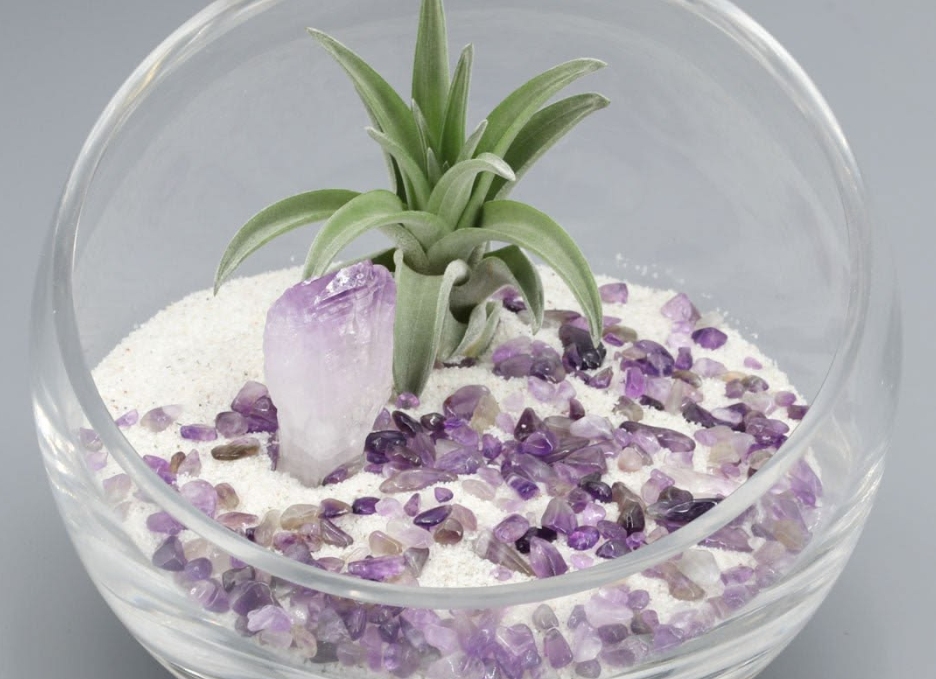
Arrangement matters just as much as the stones themselves. Even the most beautiful crystals can look cluttered and confusing if they’re placed without intention.
| Arrangement tip | Why it works |
| Use odd numbers of stones | Odd groupings look more natural and less staged |
| Vary heights and sizes | Creates visual rhythm and depth |
| Place focal stones off-center | Follows the rule of thirds for a balanced feel |
| Mix textures (rough + polished) | Adds contrast and visual interest |
| Consider sight lines | Think about how the terrarium looks from all angles |
Start with your largest or most dramatic piece and build outward from there. Treat it like you’d arrange a little vignette on a shelf, there’s a center of gravity to every good composition, and your statement crystal should be it.
Moreover, don’t be afraid to move things around after the fact. Terrarium decorating is an evolving process, and what looks great on day one might look even better after a small adjustment on day five.
Caring for your decorative crystals
Crystals in a terrarium do require a little maintenance over time. Dust, algae, and mineral deposits can all build up on the surface of your stones, especially in humid environments.
A soft brush or gentle rinse with plain water is usually all it takes to keep your crystals looking their best. Avoid harsh cleaning products, which can damage the surface of more delicate minerals or leave residue that’s harmful to your plants.
Crystal terrarium decor will look its best when you treat it as part of your regular terrarium maintenance routine. A quick check every few weeks means you’ll catch any issues early and keep everything looking fresh and intentional.
You might also love: how to style terrarium rocks
If this article got you excited about using stones in your terrarium, there’s even more to explore! We put together a complete guide just on styling rocks beautifully, and it’s packed with practical tips you’ll want to try right away.
Head over and check out “Terrarium rocks: how to style them beautifully”, you’re going to love the ideas in there. It covers everything from layering techniques to color coordination in ways that take your setup to the next level.
The article also walks you through some creative arrangements that work for both beginners and experienced terrarium builders. No matter where you are in your journey, you’ll find something useful and inspiring to take away.
So don’t miss it, go give it a read and come back with fresh ideas for your next terrarium project. Your miniature garden is about to look better than ever!