
Your terrarium started as a tiny paradise but now looks like something’s gone wrong? Let’s fix it!
If you’ve noticed something fuzzy, white, or oddly colored growing inside your terrarium, you’re definitely not alone. Terrarium mold is one of the most common issues that both beginners and experienced hobbyists face at some point.
The good news is that mold doesn’t mean your terrarium is ruined. Once you understand what caused it, fixing the problem and keeping it gone becomes a manageable, satisfying process.
Not all growth is harmful, though. Some fuzzy white patches are actually beneficial organisms doing their job. Knowing what you’re truly dealing with before acting makes a real difference here.
So let’s walk through everything together: what terrarium mold looks like, why it actually shows up, how to remove it, and how to stop it coming back again and again.
What exactly is terrarium mold and why does it show up?
Mold is a type of fungus that reproduces through spores. Those spores float through the air, settle on soil, and hitch rides on plant cuttings, water, or pieces of decorative wood you add to your setup.
Closed terrariums are especially prone because moisture has nowhere to escape. Condensation keeps building, the substrate stays consistently damp, and any decaying organic matter (a dead leaf, a rotting root) gives mold exactly what it needs to establish itself.
New builds are also vulnerable during the first few weeks after setup. Fresh substrate, recently added plants, and new organic materials all introduce spores into the enclosed environment before a stable ecosystem has had a chance to form. You can also learn all about the best terrarium substrate mix here.
Terrarium mold tends to settle in the spots with the least airflow and the most moisture, near the base of plants, around wood, or on the substrate surface in corners where condensation drips most frequently.
How to tell the difference between mold, fungi, and mycelium
Knowing what you’re actually looking at before acting makes a big difference. Not every fuzzy thing growing in your terrarium is a threat, and treating harmless growth aggressively can disrupt the balance you’ve worked to build.
White fuzzy growth: mold or mycelium?
White thread-like growth across substrate is often mycelium, not mold. It’s a sign of a healthy, active terrarium ecosystem and usually helps break down organic matter quite usefully.
True mold looks denser and fluffier, typically appearing on wood, dead leaves, or decaying matter. Green, black, or yellow coloring is a strong signal that it’s actual mold.
Gray and black spots: when to act fast
Gray or black growth signals a more aggressive mold strain. It can spread fast and may harm plant tissue, especially when airflow inside your terrarium stays consistently low.
Unlike white mycelium, gray and black mold types don’t self-regulate over time. If you spot terrarium mold in these shades, acting promptly before it reaches healthy plants matters.
Yellow or orange patches: slime molds and beyond
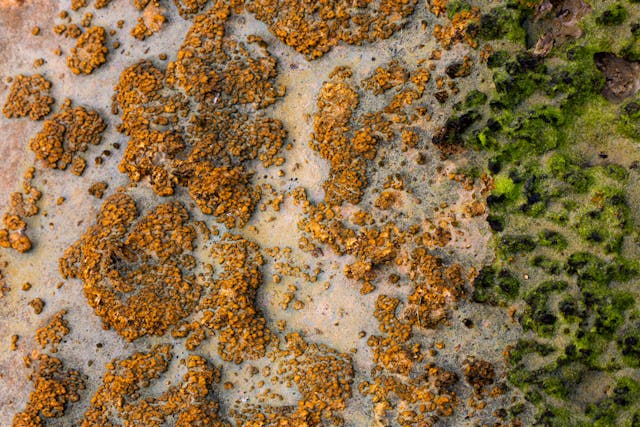
Yellow or orange fuzzy patches are less common but do appear. They usually indicate mold colonies at a developed stage, or slime molds behaving similarly inside closed terrariums.
Slime molds feed on bacteria and decaying matter rather than living tissue, causing no harm. They’re fascinating to observe and typically disappear on their own without intervention needed.
Guide to removing mold from your terrarium
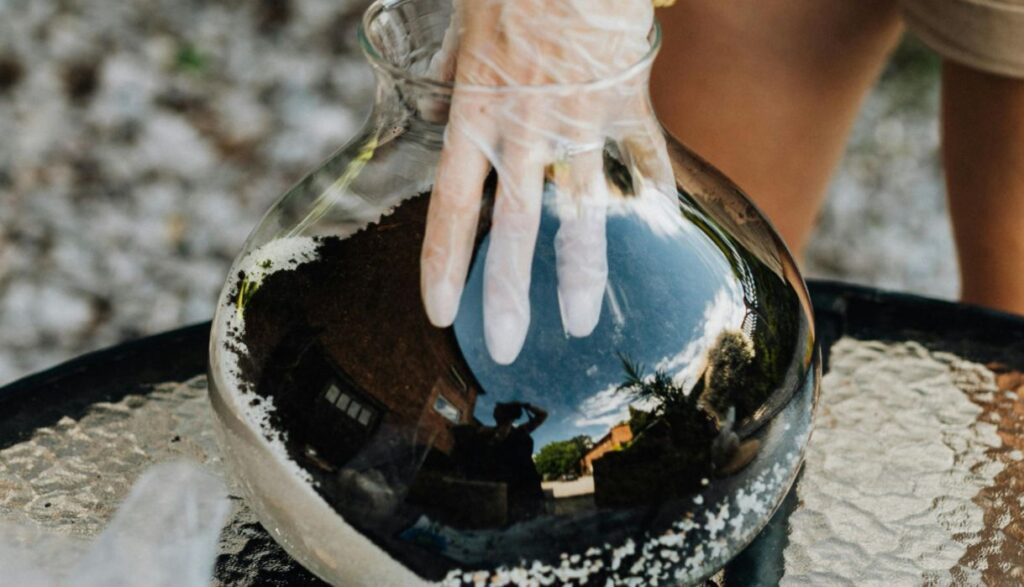
Ready to fix the problem? Here’s a practical guide that walks you through the full process, from the first careful look to long-term monitoring. Take it step by step and you’ll see results quickly.
Step 1: identify and isolate the source
Before touching anything, look closely and figure out where growth is concentrated. For example, wood, substrate, or a dead leaf, so you know exactly what needs removing first.
Once you’ve found the source, avoid disturbing it carelessly. Disrupting mold releases spores across your terrarium. Work slowly with gloves, removing affected pieces cleanly in one careful movement.
Step 2: remove all affected material
Use tweezers or tongs to remove visibly moldy items like dead leaves, rotting wood, contaminated substrate. Place everything into a sealed bag to safely contain any loose spores.
If mold covers a wider area, gently scrape the top half-centimeter and replace with fresh substrate. Avoid going deeper, as that could stress both roots and beneficial microfauna.
Step 3: increase ventilation temporarily
After cleaning, increase airflow right away. Open your closed terrarium lid for a few hours each day over the following week so the substrate surface can dry out.
Terrarium mold struggles to regrow when the substrate gets regular airflow. A temporary ventilation shift is usually all it takes to break the cycle without overhauling your setup.
Step 4: apply a natural antifungal agent
Cinnamon is a plant-safe antifungal that genuinely works. A light dusting across the substrate or wooden elements helps prevent mold returning while your terrarium re-establishes its natural balance.
Activated charcoal in the drainage layer makes a meaningful long-term difference. If your build doesn’t include it yet, adding charcoal during your next rebuild is definitely highly worthwhile.
Step 5: monitor and adjust over time
After cleanup, monitor your terrarium closely for two to three weeks. Check daily for fuzzy patches and address any regrowth early before it has a chance to spread.
If terrarium mold keeps returning despite your efforts, something environmental needs adjusting, likely humidity, ventilation, or decaying matter. Each tweak brings you closer to a real balance.
How to prevent mold from coming back
Prevention is far easier than treatment. A few consistent habits and the right setup choices make a remarkable difference in how your terrarium holds up over time.
| Prevention habit | Why it helps |
|---|---|
| Remove dead leaves promptly | Decaying matter is mold’s favorite food source |
| Avoid overwatering | Excess moisture creates the ideal mold environment |
| Use a drainage layer | Keeps roots from sitting in waterlogged substrate |
| Add springtails | Tiny creatures that eat mold spores and decaying matter |
| Ventilate regularly | Airflow disrupts the warm, stagnant conditions mold prefers |
| Use sterilized substrate | Reduces the number of spores introduced at setup |
Adding springtails: your terrarium’s cleanup crew
Springtails are tiny arthropods that consume mold spores and decaying matter naturally. Adding a culture gives you a self-sustaining cleanup crew working inside your terrarium around the clock.
They reproduce fast, are harmless to plants, and easy to find at terrarium suppliers. A springtail colony is one of the most effective preventive investments available to you.
Sterilizing materials before they go in
Driftwood, bark, and coconut fiber can carry spores into your terrarium before the lid closes. Baking wood at a low oven temperature beforehand is a simple, effective precaution.
Using sterilized or commercially prepared substrate also reduces spore load from day one. Combined with a proper drainage layer, clean starting materials dramatically lower your long-term mold risk.
Closed vs. open terrariums: does terrarium mold behave differently?
Yes, and understanding the difference helps you make smarter choices for your setup, especially if you’ve been battling recurring mold and can’t figure out why it keeps coming back.
Why closed terrariums are more vulnerable
Closed terrariums create their own water cycle, moisture evaporates, condenses on glass, and drips back. That constant humidity is exactly what terrarium mold thrives on when unmanaged.
A proper drainage layer, balanced substrate, and a healthy springtail population are all essential. Without those, closed builds remain significantly more vulnerable to recurring mold than open terrariums.
Open terrariums and how they handle moisture
Open terrariums let surface moisture evaporate more freely, making mold far less frequent. Plants in open builds prefer drier conditions, naturally reducing the high humidity that mold loves.
If closed terrarium mold keeps recurring and you’re not ready for a full rebuild, try a semi-open lid. Even partial ventilation can meaningfully shift the moisture balance inside.
Also worth reading: terrarium plant care
Healthy, well-chosen plants help control moisture and reduce mold risk inside your terrarium. Understanding plant care is a natural next step after tackling the mold issues you’ve faced.
We’d love for you to check out “Terrarium plant care: what you must know first”, covering species selection, watering, and everything your plants genuinely need to thrive.
From watering to lighting and substrate compatibility, that article walks you through the essentials in a friendly way that pairs perfectly with what you’ve just read about mold.
Go ahead and give it a read! You’ll feel much more confident building a thriving terrarium where terrarium mold is far less likely to ever take hold.