
Your plants are trying to tell you something: here’s how to understand what they need and keep them thriving!
Getting started with a terrarium feels exciting until your plants start yellowing, rotting, or just mysteriously giving up. Well, terrarium plant care isn’t complicated, but it does ask you to pay attention to a few key things most beginners skip entirely.
A terrarium is a tiny ecosystem, and every little choice you make affects the whole thing. The wrong substrate, too much water, or the wrong light spot can turn your glass garden into a soggy mess faster than you’d expect.
The good news? Once you understand how the environment inside a terrarium works, most of the guesswork disappears. You’ll start reading your plants instead of panicking at the first yellow leaf.
So if you’ve been wondering why your terrarium keeps struggling (or you just want to set one up the right way from day one) you’re in the right place. Let’s dig in together.
Understanding the terrarium environment
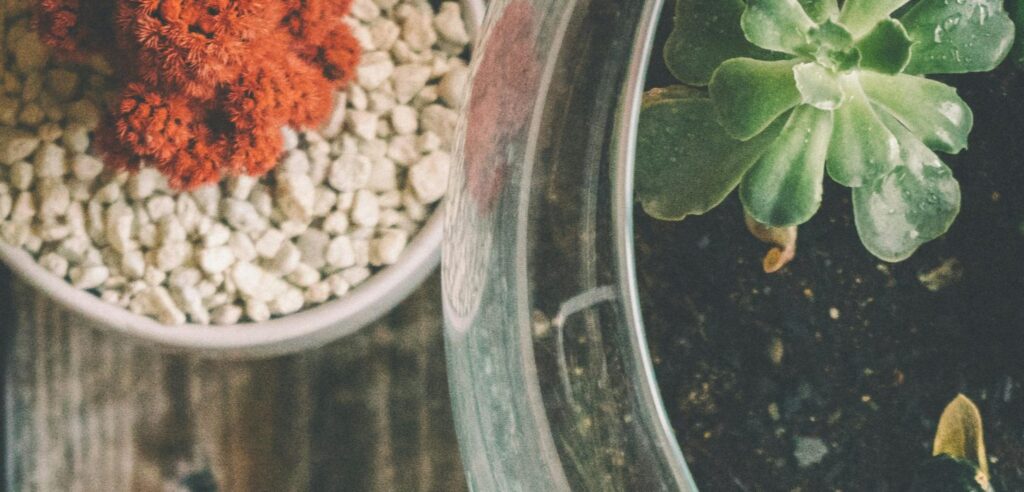
Every plant reacts to its surroundings, and inside a terrarium, those surroundings are completely shaped by you. The container size, the lid situation, the placement in your home, all of it creates a microclimate your plants will either love or struggle with.
Light, temperature, and your plant’s daily rhythm
The temperature inside a glass container can shift surprisingly fast depending on where it sits. A spot that feels comfortable to you might be cooking your terrarium plants slowly if afternoon sun hits it for hours.
Most terrarium plants thrive in stable, warm temperatures between 18–26°C. Dramatic swings, like sitting near a drafty window or a heating vent, are far more stressful to your plants than a slightly imperfect light setup.
You can find more information about terrarium lightning here! Compare LEDs vs natural light and see which one fits your project best.
How glass changes the growing conditions
Glass traps and concentrates whatever conditions exist inside, which works in your favor when everything’s balanced, but amplifies problems when something’s off. Even a small excess of water or heat gets magnified inside an enclosed space.
That’s why terrarium plant care rewards observation more than routine. Checking in on your setup every few days helps you catch small shifts, a little too much condensation, a leaf pressing against the glass, before they turn into bigger issues.
Choosing the right plants for your setup
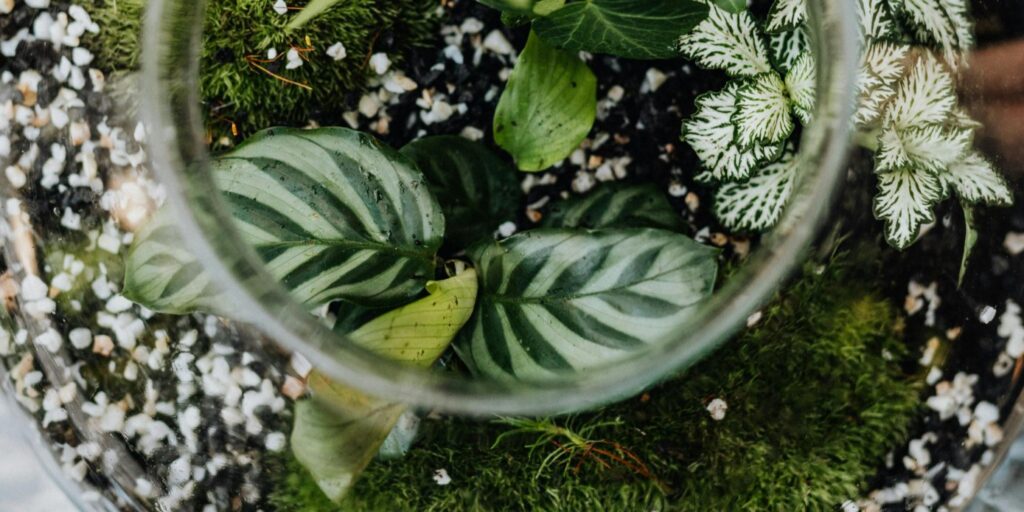
Not every plant belongs in a terrarium, and that mismatch is one of the most common reasons things go wrong. Succulents, for example, hate the high humidity of a closed terrarium, they’ll rot before you even notice.
- Match the plant to the container type. Moisture-loving plants like fittonia, moss, baby ferns, and small peperomias belong in closed setups. Succulents, air plants, and small cacti do much better in open ones with airflow.
- Check the mature size. A plant that outgrows your container in a few months will crowd everything out and force you to rebuild the whole setup way sooner than you’d like.
- Think in layers. Combining a taller focal plant, a mid-level spreader, and a ground-cover like moss creates a natural, balanced look that also helps each plant get the light it needs.
- Stick to plants with similar needs. Mixing a drought-tolerant succulent with a humidity-craving fern is a recipe for one of them dying — choose plants that want the same conditions.
- Go slow with new additions. Adding too many plants at once makes it hard to tell which one is causing problems if something goes wrong. Build gradually and give each plant time to settle.
For open terrariums, drought-tolerant herbs and small ornamental grasses can also work beautifully if you want something a little different from the usual succulent lineup.
Always think about the mature size of your plant before adding it. A plant that’ll outgrow the container in three months will cause you way more headaches than it’s worth, no matter how cute it looks at the shop.
Watering: the most misunderstood part of terrarium plant care
Overwatering is the number one killer of terrarium plants, full stop. Because the glass container limits evaporation (especially in closed ones), water has nowhere to go and roots sitting in soggy substrate will rot fast.
The golden rule is simple: water less than you think you need to. For closed terrariums, start by misting lightly and watching how the condensation behaves. If the glass fogs up heavily every morning and doesn’t clear by afternoon, that’s too much moisture.
For open terrariums, stick your finger about an inch into the substrate. If it still feels damp, wait. If it’s dry, add a small amount of water, just enough to moisten without saturating.
Terrarium plant care asks you to observe before acting. Resist the urge to water on a fixed schedule and instead respond to what the plants and substrate are actually telling you.
Light requirements: getting placement right
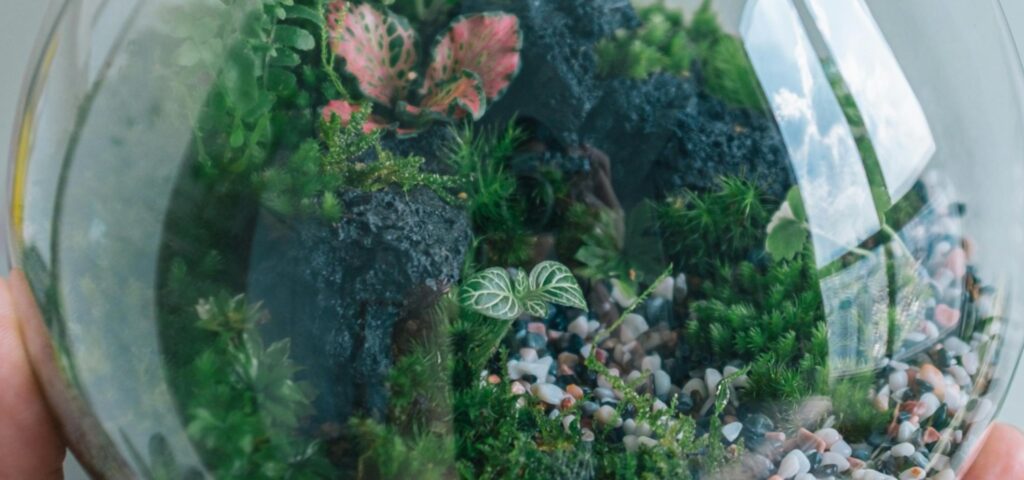
Light is one of those things that feels simple until your plants start behaving strangely. Too much and you get scorched, bleached leaves; too little and everything gets leggy and pale.
The good news is that once you find the right spot, your plants will usually tell you pretty quickly that they’re happy with full, vibrant leaves and steady new growth.
Finding the sweet spot for indoor light
Most terrarium plants prefer bright, indirect light rather than direct sun. Placing a glass terrarium in direct sunlight works like a magnifying glass, it intensifies the heat and can literally cook your plants from the inside.
A spot near a north- or east-facing window usually works really well for most terrarium plant choices. You get plenty of light without the harsh midday intensity that causes scorching.
Using grow lights as a supplement
If your home doesn’t get much natural light, grow lights are a fantastic solution. LED grow lights designed for houseplants provide the right spectrum, run cool, and can easily be set on a timer.
Position the grow light about 20–30 cm (8 to 12 inches) above the top of your terrarium for best results. Most plants will do just fine with 10–12 hours of supplemental light per day as part of good terrarium plant care.
Feeding your terrarium plants
Terrarium plants generally don’t need much fertilizer. The enclosed environment limits how fast they grow, and overfeeding causes more problems than it solves. If you do fertilize, use a very diluted liquid fertilizer no more than once every two to three months.
For moss-heavy terrariums, skip fertilizer altogether. Moss actually prefers low-nutrient environments, and adding fertilizer encourages the growth of competing weeds and algae that can quickly take over your whole setup.
Organic slow-release fertilizer pellets can be a gentler option for mixed terrariums with a variety of plant types. Just use far less than the packaging recommends. Terrarium conditions concentrate everything, and a little goes a very long way.
Pruning, cleaning, and general maintenance
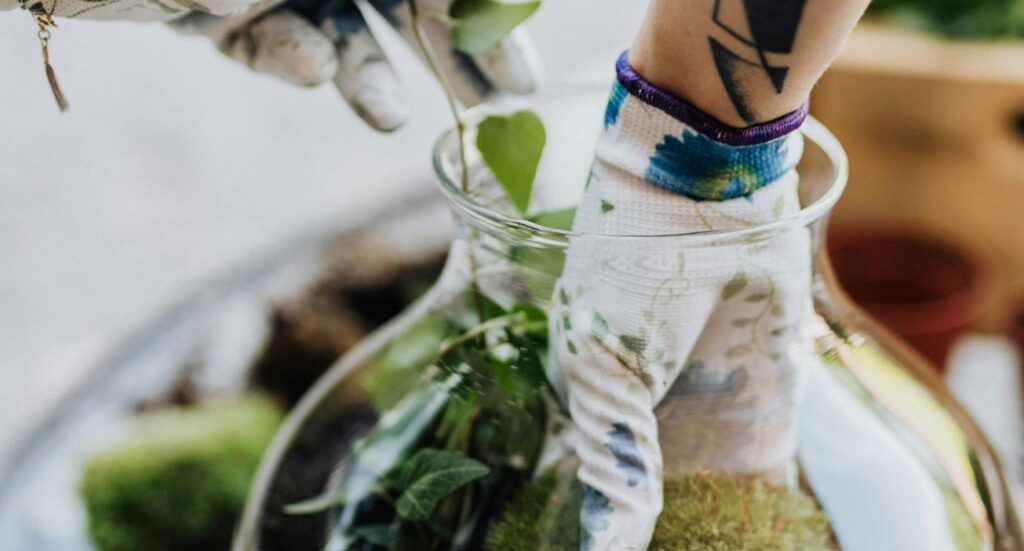
Keeping a terrarium looking great doesn’t take a lot of time, but it does ask for a little consistency. A quick check every few days (just a visual scan for dead leaves, unusual growth, or changes in moisture) is really all it takes to stay on top of things before small issues snowball.
Keeping growth in check
Plants in terrariums can grow surprisingly fast in the right conditions, especially in a warm, humid closed setup. Regular trimming keeps things looking tidy and, more importantly, prevents one plant from overwhelming the others.
Use small, clean scissors and cut just above a leaf node to encourage bushier growth rather than leggy stems. Remove any dead or yellowing leaves promptly so they don’t decompose inside the container.
Cleaning the glass and preventing mold
A bit of condensation on the inside of a closed terrarium is totally normal and even healthy. But if you notice dark spots, fuzzy growth, or a persistent cloudiness, that’s your cue to open it up and investigate.
Wipe the inside glass gently with a damp cloth to remove mineral deposits or algae buildup. A small piece of activated charcoal added to the substrate helps absorb excess gases and reduce the chance of mold developing over time.
Mistakes that are easier to avoid than fix
Even with great terrarium plant care, things can go sideways sometimes. Here’s a quick look at the most common issues and what to do about them.
| Problem | Likely cause | What to do |
| Yellow leaves | Overwatering or too little light | Reduce watering, move to brighter spot |
| White fuzzy mold | Excess moisture, poor airflow | Open terrarium, remove affected material, improve ventilation |
| Brown leaf tips | Too dry (open terrarium) or salt buildup | Mist lightly, flush substrate with distilled water |
| Leggy, stretching stems | Not enough light | Move closer to window or add grow light |
| Root rot smell | Waterlogged substrate | Rebuild drainage layer, repot plants if needed |
| Algae on glass | Too much light + humidity | Reduce light exposure, wipe glass regularly |
Seasonal adjustments in terrarium plant care
Plants inside a terrarium are somewhat shielded from the outside world, but they still respond to seasonal changes in light and temperature. During winter, days get shorter and indoor heating makes the air drier, which affects your terrarium environment.
In winter months, consider adding a few extra hours of grow light to compensate for reduced daylight. For open terrariums, you may need to water slightly more often if central heating is drying out the air in your home significantly.
In summer, be extra careful about heat buildup. A terrarium sitting near a sunny window in July can get dangerously hot inside, so you might need to move it further from the glass or add some shade during peak afternoon hours.
Paying attention to how seasons affect your space (not just the outdoors) is one of the most underrated aspects of terrarium plant care that experienced hobbyists always mention first.
Before you build your next terrarium, read this
One thing that quietly determines the success of every terrarium is something most beginners overlook completely. The substrate mix decides how well water drains, how roots breathe, and how long your setup stays healthy without constant intervention.
Getting the layers wrong from the start means you’ll fight drainage problems, root rot, and mysterious plant decline no matter how well you water or how perfectly you position your terrarium. It’s one of those foundational things that’s really worth understanding before you plant anything.
That’s exactly why we’d love for you to check out the article “Terrarium substrate mix: get it right first try”. It breaks down every layer of a proper terrarium substrate in a way that actually makes sense, even if you’re brand new to all of this.
Go ahead and give that article a read! It’ll make every tip in this guide land even better, and you’ll feel way more confident the next time you’re standing in front of a bag of soil wondering what to do with it.