
Your complete guide to turning a glass frame into a living work of art!
A geometric terrarium is one of the most eye-catching ways to bring nature indoors, and styling one beautifully is totally within your reach. You don’t need a design degree for this!
The good news is that these angular glass containers are naturally gorgeous on their own. Add the right plants and layers, and you’ve already got something special happening inside those sharp, clean frames.
What makes the difference between a so-so result and a jaw-dropping display is understanding a few key principles. Think texture, scale, color contrast, and smart plant choices working all together.
In this guide, you’ll find every tip you need to style your piece with confidence and creativity. Let’s dig in — literally — and make something you’ll be proud to show off every single day.
Why are geometric terrariums so popular right now?
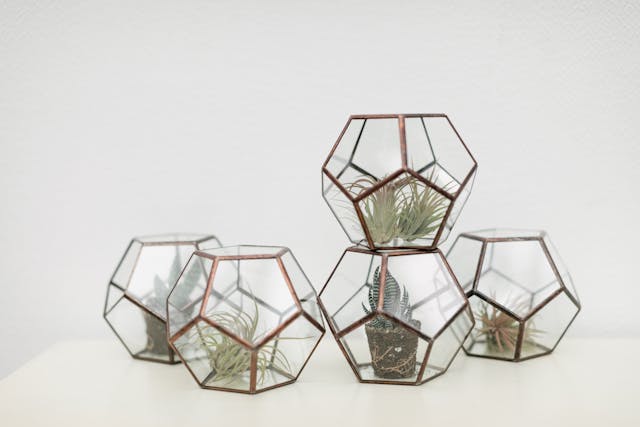
There’s something undeniably magnetic about the mix of structured geometry and wild, organic plant life. That contrast — sharp angles against soft moss, rigid glass against trailing vines — is what makes people stop and stare.
Geometric terrariums come in all kinds of shapes: triangular prisms, hexagons, pentagonal diamonds, cubes, and even irregular polyhedrons. Each shape creates a different visual rhythm, so the container itself becomes part of the design.
Furthermore, they fit beautifully into almost any interior style. Whether you lean toward minimalist Scandinavian aesthetics, maximalist botanical vibes, or something in between, there’s a geometric glass container that works for your space.
They’re also surprisingly low-maintenance when set up correctly. The enclosed or semi-open structure helps regulate moisture, which means your plants can thrive with less intervention from you.
Open vs. closed: choosing the right style for your plants
Before you style anything, you need to decide which type of geometric terrarium suits the plants you love. This single choice shapes every decision that follows, there’s a complete article with tips on how to choose the best style for your home here.
Open geometric terrariums work best for succulents, cacti, air plants, and anything that prefers dry conditions. Air flows freely through the open panels, preventing moisture buildup that could rot your plants.
Closed geometric terrariums are ideal for tropical plants, ferns, mosses, and moisture-loving species. They create a self-sustaining micro-ecosystem where humidity stays high and watering intervals stretch out beautifully.
| Feature | Open terrarium | Closed terrarium |
|---|---|---|
| Best plants | Succulents, cacti, air plants | Ferns, mosses, tropical plants |
| Humidity | Low | High |
| Watering frequency | Weekly or more | Rarely (weeks to months) |
| Light needs | Bright, indirect to direct | Indirect, filtered |
| Maintenance level | Moderate | Low (once established) |
Choosing the wrong pairing (say, a succulent in a closed, humid environment) will cause problems fast. So always match your container style to your plant’s natural habitat first. Then the styling part gets a lot more fun.
How to style a geometric terrarium in 5 steps
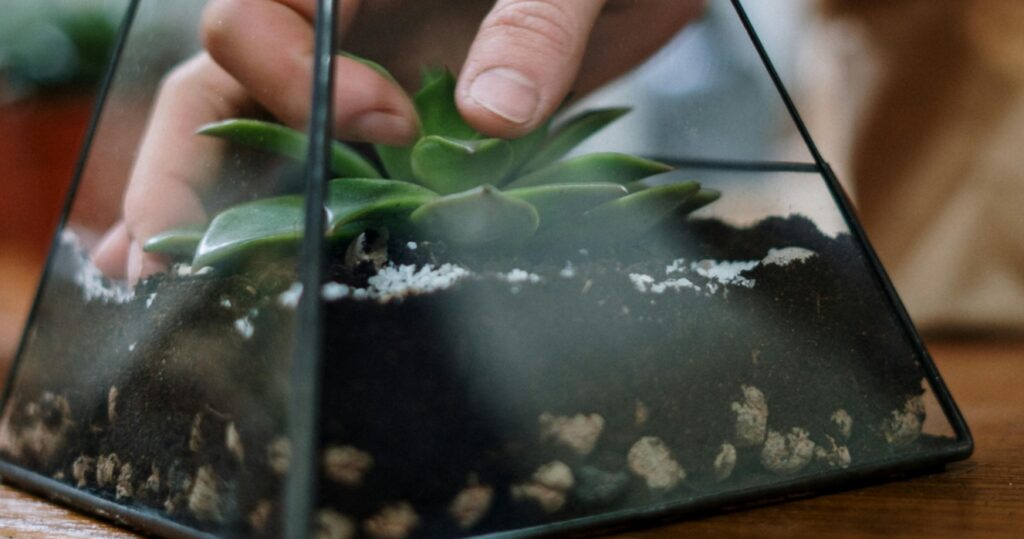
Ready to get your hands dirty? This step-by-step walkthrough covers everything from the base layer to the finishing touches. Take it one step at a time and you’ll have a stunning result.
Step 1: build your base layers
Start by adding a drainage layer of small pebbles or horticultural grit at the bottom of your geometric terrarium. This layer should be about two to three centimeters deep, depending on container size.
Next, add a thin layer of activated charcoal on top of the pebbles. Charcoal keeps the environment fresh by absorbing toxins and preventing odors, especially important in closed setups.
Finally, add your growing medium, a substrate appropriate for your chosen plants. Pack it deep enough for roots to anchor securely, usually around five to eight centimeters for most small plants.
Step 2: plan your layout before planting
Don’t just drop plants in randomly! Take a moment to plan your composition before anything goes into the soil. Arrange plants outside the container first, experimenting with placement until you love the look.
Think about height variation: place taller or upright plants toward the back or center, and low-growing or trailing plants toward the front edges. This creates a natural sense of depth.
Also consider the geometric terrarium’s viewing angle. Most display pieces have a “front”, the face you’ll see most often. Design with that perspective in mind for maximum visual impact.
Step 3: plant with intention and care
Now it’s time to actually plant! Use a long spoon, chopstick, or terrarium tool to dig small holes in your substrate. Gently lower each plant into position, firming the soil around the roots carefully.
Work from the back of the container toward the front, and from the largest plants to the smallest. This way, you won’t accidentally disturb plants you’ve already placed as you continue working.
Leave a little breathing room between plants. They’ll grow, and crowding too early leads to competition for light and space, not the vibe you’re going for here.
Step 4: add decorative layers and accents
This is where your geometric terrarium transforms from a plant container into a genuine decorative piece. Decorative elements add personality, texture, and that “finished” look that makes viewers lean in for a closer look.
Cover exposed soil with moss, fine sand, small stones, or a mix of all three. Different textures in the ground layer create visual richness, especially when viewed through those gorgeous glass panels.
Then add your accent pieces: small crystals, driftwood, miniature figurines, or colored pebbles. Keep it minimal and intentional three to five elements max. Less really is more when the container is small.
Step 5: position it and adjust the light
Once your creation is assembled, find the right spot for it. Most geometric terrariums do best in bright, indirect light near a window but out of harsh afternoon sun, which can magnify through the glass and scorch plants.
Rotate your piece every week or two so all plants receive even light. You’ll notice plants naturally lean toward their light source, and rotating prevents lopsided growth over time.
Finally, step back and take a long look. Does anything feel off? Adjust accents, tuck in a little extra moss, or swap a pebble color. Trust your instincts, you’ve built something great.
Choosing the right plants for your design
Plant selection is honestly one of the most creative parts of the whole process. The plants you choose set the mood, color palette, and texture of your geometric terrarium, so it’s worth taking your time here.
For open containers, try combining a tall, architectural succulent like Haworthia or Echeveria with a ground-hugging variety like Sedum for contrast. The difference in form and scale creates a naturally dynamic composition.
For closed containers, miniature ferns like Pellaea rotundifolia, creeping fig (Ficus pumila), and small-leafed mosses are fantastic choices. They create a lush, forest-floor feeling inside the angular glass frame.
Additionally, air plants (Tillandsia) are fantastic for open geometric terrariums because they need no soil at all. You can tuck them between accent stones or perch them on a tiny piece of driftwood for a floating effect.
Color, texture, and scale: the styling trio
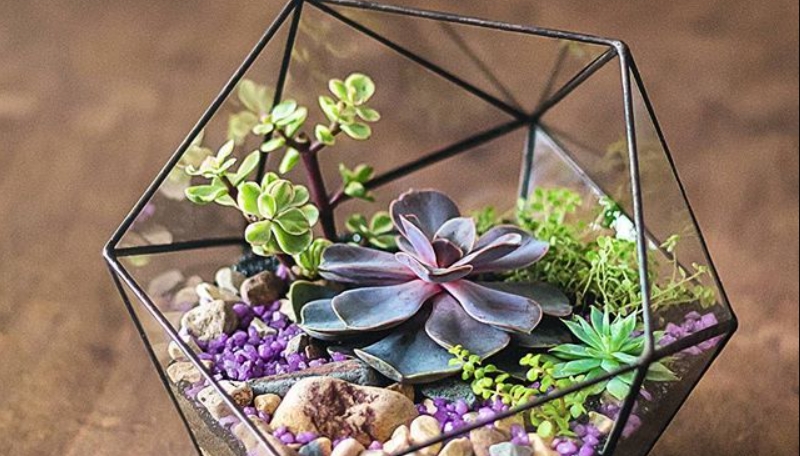
Beyond plant choice, three principles guide every great terrarium design: color, texture, and scale. Understanding how these three elements interact will level up your styling game considerably.
Color is about contrast and harmony. Pair silver-leafed succulents with deep green moss, or warm terracotta-toned stones with cool-toned plants. Avoid matching everything too closely. Some contrast keeps the eye moving and engaged.
Texture adds depth and tactile interest. Smooth river stones against fuzzy moss, spiky cacti beside soft, rounded pebbles. These combinations make your geometric terrarium feel rich and layered, even inside a compact space.
Scale is often overlooked but incredibly important. Mixing plant sizes, stone sizes, and accent sizes creates a sense of natural variety. A single tiny figurine looks intentional; five of the same size looks cluttered and unfocused.
Styling mistakes and how to avoid them
Even experienced plant lovers make terrarium styling mistakes and that’s completely okay! Knowing the most common pitfalls helps you sidestep them with ease.
- Overcrowding plants: this is mistake number one. It’s tempting to fill every bit of space, but packed-in plants compete for resources and quickly outgrow their space. Give each plant room to breathe and shine.
- Ignoring drainage: this leads to root rot, which is sadly a common killer of otherwise beautiful setups. Always include that drainage layer of pebbles and charcoal before your substrate, no matter how small your geometric terrarium is.
- Using the wrong soil: standard potting mix holds too much moisture for succulents and cacti. Use a fast-draining cactus mix for dry setups and a moisture-retaining mix for tropical ones.
- Over-decorating: this can turn a lovely piece into a cluttered curiosity cabinet. Accent pieces should support the plants, not compete with them. When in doubt, remove one thing — it almost always looks better.
Maintenance tips to keep your creation looking amazing
Your geometric terrarium doesn’t need constant attention, but a little routine care goes a long way in keeping it looking fresh and thriving. Consistency beats intensity every time.
For open terrariums, water lightly and only when the soil is dry. Succulents and cacti are remarkably forgiving of underwatering, but they really don’t tolerate soggy roots. A small watering can with a narrow spout gives you control.
For closed terrariums, watch for condensation. A little misting on the glass interior is normal and healthy, but if droplets are running down the sides constantly, open a panel briefly to let things dry out a bit.
Trim any plants that are outgrowing their space, and remove any dead leaves promptly to prevent mold. Every few weeks, step back and look at your geometric terrarium with fresh eyes to see if anything needs adjusting.
You’ll want to read this next
If you loved this guide, there’s another article waiting for you that takes your terrarium skills even further. Depth is one of the trickiest visual concepts to master, but once you get it, your designs will genuinely transform.
In that piece, you’ll discover techniques for creating the illusion of distance and dimension inside even the shallowest containers. It covers layering, perspective tricks, and plant placement strategies that work beautifully.
You don’t need a deep container to achieve a sense of lush, three-dimensional space and that article shows you exactly how to pull it off with clever, accessible methods anyone can try.
Head over to “How to create depth in a flat terrarium” and take your design skills to the next level. It’s a fantastic companion read to everything you just learned here, and we think you’ll love it!