
Ready to give your terrarium a glow-up? Check out these rock styling ideas that’ll transform your mini garden!
So, you’ve got a terrarium sitting on your shelf and something feels off? Terrarium rocks are one of the most powerful styling tools you have, and choosing them well changes everything about the final look.
They add texture, contrast, and a sense of depth that plants alone just can’t achieve. A handful of smooth river stones next to a lush fern creates that natural, earthy vibe that makes terrariums so satisfying to look at. The contrast between organic greenery and solid mineral shapes is genuinely beautiful.
But here’s the thing: it’s not enough to just toss a few pebbles in and call it a day. The placement, the colors, and even the sizes you choose will make or break the final look. Thoughtful styling is what separates a terrarium that looks like a rushed project from one that looks like a piece of living art.
Fortunately, the whole process is actually a lot of fun, and you don’t need any special skills to do it well. All you really need is a good eye, a little patience, and the ideas you’ll find throughout this article. Let’s dig in!
Choosing the right rocks for your terrarium style
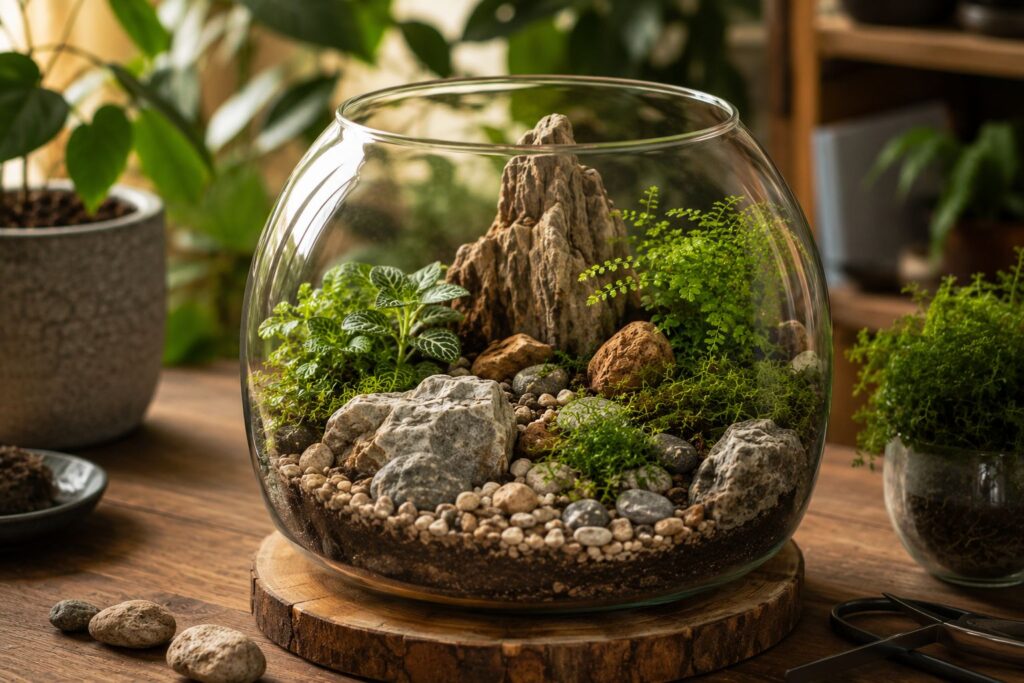
Before you start arranging anything, you’ll want to pick rocks that actually match the aesthetic you’re going for. There are so many options out there, like polished gems or raw, rough-edged stones, and each one tells a different visual story.
Think about the overall vibe of your terrarium first. Are you going for a lush jungle feel? A dry desert landscape? A minimalist zen garden? Your rock choices should support that theme rather than compete with it.
Matching rock types to your terrarium theme
For tropical or jungle-style terrariums, go for darker, mossy-looking stones or rocks with earthy tones. Deep grays, warm browns, and blacks tend to blend naturally with dense greenery and give everything a rich, grounded look.
Desert terrariums look amazing with sandstone, quartz, or light-colored pebbles. These pale tones mimic the dry landscape and make your succulents and cacti feel right at home inside the container.
Mixing textures for visual interest
Combining smooth and rough rocks adds a lot of dimension to your setup. Try pairing a cluster of polished pebbles with one or two larger, textured stones as focal points. The contrast is really satisfying visually.
Don’t be afraid to mix sizes, either. A variety of small, medium, and larger terrarium rocks keeps the eye moving around the display and makes everything feel more dynamic and alive.
How to style terrarium rocks: 4 easy steps
Now that you’ve chosen your rocks, it’s time to actually place them. This is where the magic really happens, and a little planning goes a long way. Grab your container, your rocks, and let’s work through the process together.
Step 1: start with your base layer
Before adding any soil or plants, lay down a drainage layer of small rocks or gravel at the bottom of your container. This layer is both functional and visual, you’ll often see it through the glass walls, so choose something that looks good. If you want more details about how to layer terrarium soil like a pro, check our exlusive article here!
Light-colored gravel or small white pebbles make a clean, bright base. Darker stones give a moodier, more dramatic effect. Either way, this first layer sets the foundation for everything that comes after.
Step 2: add your decorative rocks strategically
Once your plants are in place, it’s time to bring in your decorative terrarium rocks. Rather than spreading them evenly across the surface, try grouping them in odd numbers, threes and fives look much more natural than pairs or even clusters.
Place your largest rock first, then build around it with smaller ones. Think of it like you’re creating a tiny landscape. Rocks should feel like they belong there, not like they were dropped in randomly from above.
Step 3: create focal points with statement stones
Every great terrarium has at least one spot where your eye naturally lands. Use a striking statement rock (something with an interesting shape, a sparkle, or an unusual color) to create that anchor point in your design.
Position your focal stone slightly off-center for the most natural look. Centering it can feel a little too symmetrical and stiff. Offset placement gives the whole terrarium a more organic, relaxed feeling that’s easy on the eyes.
Step 4: fill gaps and finish the surface
After your main rocks are placed, use smaller pebbles or fine gravel to fill in any gaps between them. This finishing layer pulls everything together and makes the surface look intentional and polished.
At this point, step back and look at your terrarium from different angles. Rotate the container slowly and check for any spots that look too bare or too crowded. Small adjustments at this stage make a huge difference to the overall result.
Color combinations that actually work
Color is one of the most fun parts of styling with rocks, and it’s easier than most people think to get it right. A simple starting point is to pick two or three tones that complement each other and stick with them throughout the design.
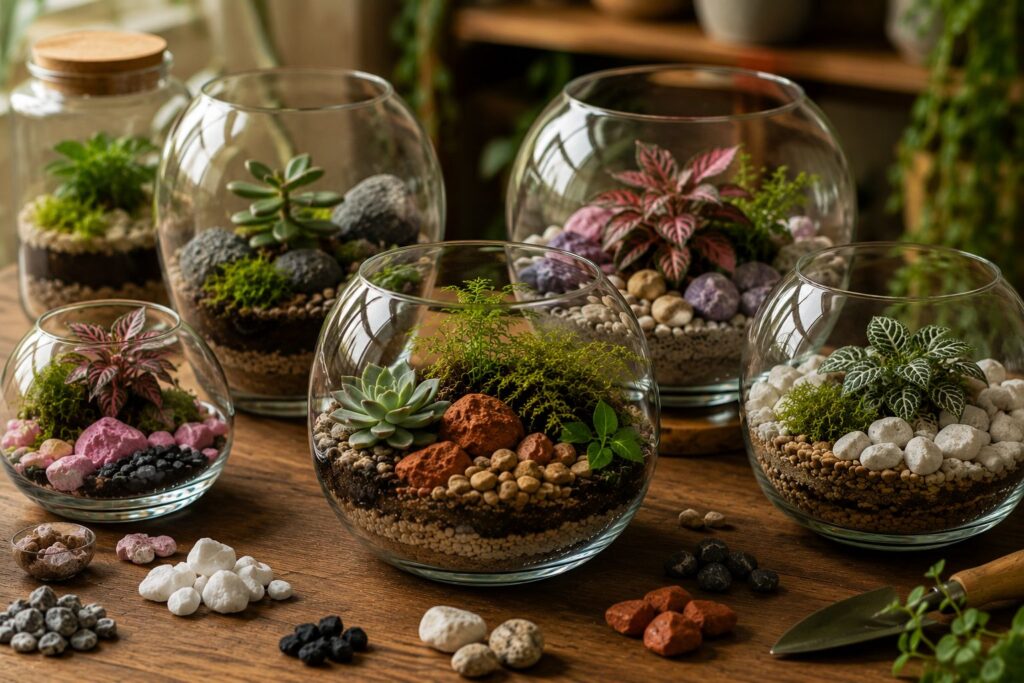
Neutral palettes (think whites, grays, and sandy beiges) work with almost every plant type and container style. They’re safe choices that still look clean and beautiful without overwhelming the greenery inside your terrarium rocks arrangement.
For something with more personality, try a warm accent stone in terracotta, rust, or deep orange among a neutral base. That pop of warm color brings energy to the display and draws the eye immediately. Just keep the accent pieces limited so they stay special.
Cool-toned rocks like blue slate, purple amethyst chips, or pale lavender pebbles pair beautifully with silver-leafed plants or bright greens. The contrast feels refreshing and a bit unexpected, which is exactly what makes a terrarium memorable.
Common mistakes to avoid when styling rocks
Even with the best intentions, it’s easy to fall into a few styling traps. Knowing what to watch out for saves you a lot of time and frustration in the long run:
- Using too many rock types at once. When there are five or six competing textures and colors, nothing stands out — the whole thing starts to look cluttered and chaotic instead of curated.
- Ignoring scale. Tiny pebbles in a large terrarium can look lost and insignificant. Conversely, oversized rocks in a small container will crowd out your plants and make the space feel cramped. Always consider scale relative to your container size.
- Skipping the cleaning step. Outdoor rocks especially can carry bacteria, mold, or pests that’ll harm your plants. A good rinse and a quick soak in diluted bleach solution, followed by thorough drying, will keep your terrarium healthy and happy.
Quick reference: rock types and their best uses
Here’s a handy guide to help you pick the right rocks for different terrarium styles:
| Rock type | Best for | Visual effect |
| River pebbles | Tropical, jungle | Smooth, natural, earthy |
| Quartz chips | Desert, minimalist | Bright, sparkly, clean |
| Lava rock | Succulent, arid | Textured, dramatic, dark |
| Sandstone | Desert, rustic | Warm, crumbly, natural |
| Slate pieces | Modern, zen | Flat, structured, cool-toned |
| Amethyst chips | Accent, any style | Purple, eye-catching, unique |
| White gravel | Base layer, drainage | Bright, clean, neutral |
Use this table as a starting point, and don’t be afraid to experiment. Sometimes the most unexpected combinations turn out to be the most beautiful ones!
Small touches that make a huge impact
Beyond the rocks themselves, it’s the little details that elevate a terrarium from nice to wow. Pairing your terrarium rocks with complementary elements like driftwood, moss, or small figurines creates a layered, storytelling effect that people absolutely love.
Moss is especially useful because it softens the hard edges of rocks and makes everything feel more lush and alive. Try tucking small clumps of cushion moss between your larger stones for a naturally grown-in look.
Miniature decorative items — like tiny mushrooms, fairy doors, or animal figurines — add a whimsical personality to the display. Just keep them in proportion and limit yourself to one or two accent pieces so they enhance rather than distract from your rock styling.
Lighting also plays a huge role. A small LED spotlight or even just positioning your terrarium near natural light will make your rocks glow and your whole display look dramatically more vibrant and alive.
You might also enjoy: best terrarium decorations that look natural
If you loved exploring how terrarium rocks can transform your mini garden, you’ll definitely want to keep reading about other ways to make your terrarium look as natural as possible. There’s so much more to discover when it comes to styling with organic materials.
We put together a full guide covering the most beautiful and realistic decoration options available, from driftwood and cork bark to natural sand and preserved botanicals. Each piece adds its own special character to your display.
That article also walks you through how to combine different natural elements without making things look overdone or artificial. Getting that balance right is what makes the difference between a terrarium that looks store-bought and one that looks genuinely handcrafted.
Go check out “Best terrarium decorations that look natural”, you’re going to love the ideas in there, and it pairs perfectly with everything you just learned about rock styling. Your terrarium is going to look absolutely stunning!